0:13
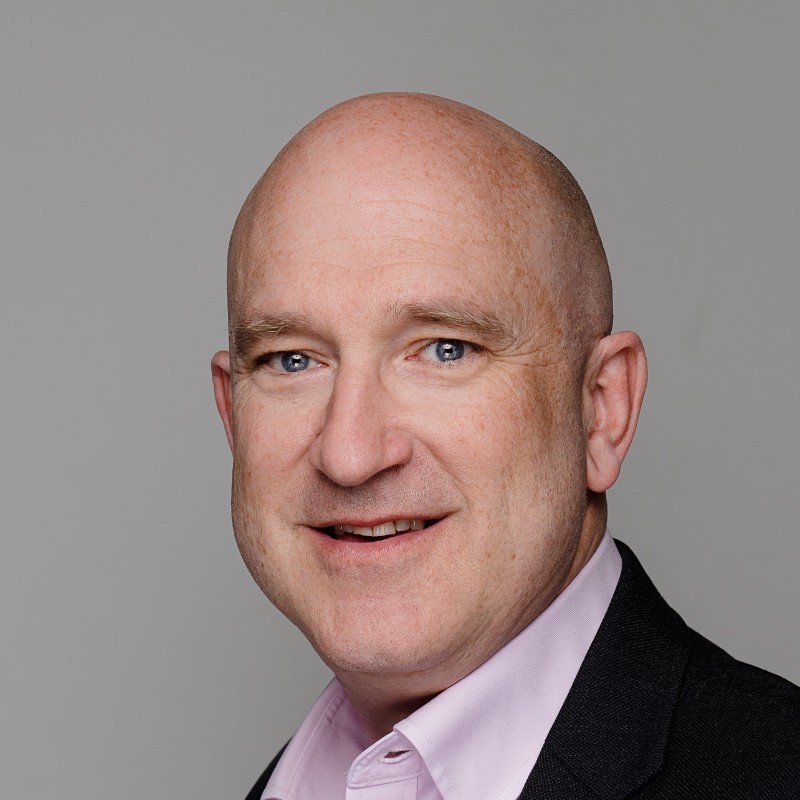
Daniel Kushner
Colin, you may begin.
0:15
Colin Day
Excellent. Thank you very much, Daniel. Good morning, good afternoon, and good evening, dependent upon where you're joining us from around the world. It's great to see so many of you joining from continents all over the place. Tyler rattled off a couple of your names earlier on. If we missed any, then I do apologize. It's terrific to see so many people joining the session today. This session being B2B Marketing Strategies, Building the Work from Home, or the WFH Dream Team. I'm joined on this panel discussion by my own dream team, and we'll get into some introductions in a minute. I'm Colin Day. I'm the managing director of EMEA and Asia Pacific at Oktopost, and I'll be your chair for the next 40 minutes. My dream team panelists that you can see up on the screen, their lovely faces. We're joined by Tyler Lassard, the Vice President of Marketing at Vidyard, giving you a high five there and a wave. We've got Scott Vaughan, the Chief Growth Officer at Integrate Inc. Thumbs up, Scott. And I've got my very own Daniel Kushner, the CEO of Oktopost. Hi, Daniel. All right. I am just going to advance the slides. So we're all. We're all coping and we're all cooped up at home, ensuring that we're social distancing. It's great to see in the back of Tyler's background there, you can see some artwork from. From his children. Great to see a bit of color in your house, Tyler, but we're all keeping six foot apart, as it says on the screen, or from where I am in the UK, 2 meters apart. Over the course of the next 40 minutes, we're going to be exploring what we should be thinking about from a sales and marketing perspective as we look at technologies to support our brands and as we work through these shifting times. The session will kick off with each of the panelists giving some opening comments before we move into a general Q and A session. So without further ado, I'm going to hand off to Daniel Kushner, the CEO of Oktopost, to give us his thoughts on why the work from home movement that Oktopost is part of came about and what was the logic and rationale behind it. So, Daniel, the baton's yours. Take over, my friend.
2:50
Daniel Kushner
Thanks a lot, Colin. So being in 2020 and SaaS is at its prime, and then all of a sudden, Covid came along. We're seeing many businesses and organizations all struggling to figure out how they're going to continue doing business as normal as possible, but from working from home and from a selling perspective or from a vendor perspective. When I'm talking with our sales team, we need to remind them when we're selling our software or our platform, we know how to sell better than Sunny knows how to buy. So if we're selling into the martech industry, for instance, so CMO is going to buy a dozen, two dozen different platforms and we're a single salesperson setting that on a weekly or monthly basis. So the amount of experience and back and forth that we have with our customers puts us in a position where we're not only selling our solutions, but we're also advising on best practices and what they should be doing. And when I look at the recent events and how businesses are purchasing, sometimes they're a bit confused on how do they pick the right vendor to support the new environment. And we know what's happening now and nobody has any clue on how long is this going to take. And I think most of us are predicting that working from home is going to become a new norm. Even when things get back to normal. I think we can have a whole session on how people feel. They're much more productive working from home today than they were in the office. So I think a lot of what's happening today is going to continue, even post, whenever that comes post Covid. So from our perspective, we wanted to build some kind of forum or movement, if you want to call it, where SaaS companies can have discussions with their clients, their customers, their prospects around how their solution not only helps in a specific domain area, if it's Oktopost for social or Vidyard for video, but how it helps their teams work remotely from home and from across the country, most many cases across the globe. And so we put a list, which is definitely not the end list but a starter list of things that we think platforms should provide. I think the basic is that it's available through simple Internet access. There are many platforms that you can't access through your home Internet and you have to be behind a firewall. We see it lots in the financial industry where if you're not physically in the location, there's no access. There's lots of data. So that's one. I think when you're talking about maybe video and maybe Tyler can give us some information on that. It's, you know, sometimes video is heavy files and if you don't have a 2 gigabyte optical line into your house, maybe it's not going to work. The specific platform. So we have to make sure that we're aligned there around governance and compliance. You know, sometimes when somebody is working remote, you want to make sure that they're doing what they meant to be doing and not swaying often to different aspects of the platform or in social, using certain words on social posts without some governance around that. I'll give you another example around in app messaging or at least supporting some type of messaging even if it's through an external platform like Slack Microsoft Teams, because people do need to collaborate. And when you have when I'm looking at a screen and I want to send that screen to you, Colin, right. I want to send you a URL. I don't want to say, hey Colin, go in login, press that button, press that, turn right, turn left, and then you'll see what I see. You have to make it simple. And this is either like sharing a URL through a messaging platform or using an inbuilt messaging platform in the actual solution. So that's why there are many more reasons. You know, have a blog about it. And we spoke to other solution providers and I hope more companies will join.
7:30
Colin Day
Excellent. So Daniel, I think that was your shout out for any technology partners or vendors out there to come and join the WFH movement, right?
7:42
Daniel Kushner
Most definitely.
7:43
Colin Day
Perfect. Perfect. Daniel, thanks for those opening comments. We've got some questions lined up for each and every one of you. Afterwards I'm going to move on to on to Tyler Lessard, the Vice President of Marketing over at Vidyard. And Tyler wanted to give us some opening comments about using video to ensure the WFH doesn't become the wtf. And I'm not too sure what WTF stands for Tyler, but I will let you explain all to the audience. The baton is yours.
8:17
Tyler Lessard
Well, it's an acronym we use here in Canada when it is snowing at the end of April, which is why I have this colorful decorations up here in my office. So I'll just leave it at that. So thanks so much for having me. And to to your point, Vidyard is proud to be one of the vendors working with you guys on the Work from Home Compatible Movement. And I agree this is important to help people understand not just what technologies are available, but specifically how they help us run our businesses, help our employees stay engaged, and help us all remain as productive as possible while we're in this remote working world. And again, I'll echo the fact that all signs that we're seeing point to this being a long term reality, even when the Pandemic is over. We fully anticipate many businesses will be more remote than ever. And we need to be smart about what technologies we're using right now here in the world of Vidyard, for those who don't know, we are a video technology platform with a variety of solutions for video in marketing, sales, internal communications, customer service, and so on. And we've seen a lot of interesting things happening in this space. I mean, we all know that tools like Zoom and others for video conferencing have surged in popularity for obviously good reason, because we need to stay collaborative and connected while we're remote. And video conferencing is an incredible solution for that. And I think we should all be thankful that we're doing this at a time when we can continue to work fairly seamlessly while remote with things like video conferencing. But there are other areas where we're seeing the need for video and asynchronous and on demand video again as a way to support our work from home activities, as well as to keep our teams productive. In the world of marketing, we all know that events aren't happening in person and a lot of people are moving to webinars, virtual events, things like we're seeing here, as well as more and more online video content as a way to keep that connection going with their audiences at times when they can't meet face to face. We have tools to help in all those different areas as you look to leverage that content on an ongoing basis. But perhaps more importantly, sales teams, we all know sales teams are really struggling right now with the inability to collaborate as a team as well as to meet customers face to face and get out in the field. And we're seeing more and more people now adopting both video conferencing as well as one to one video messaging. And that's where we're seeing the biggest surge ourselves in terms of adoption and usage during these remote work times, is people adopting the tool you see on the bottom right, which we have a free version available that makes it easy to record and send one to one videos to customers, to prospects, internally, to other employees. And it helps you keep that face to face feeling that natural conversational tone, but without having to book a video call every time. And we've seen it to be really effective prior to work from home, but even more effective now as people are trying to keep their face out there. But frankly, we can't hop on Zoom calls all the time. And then the last point, there is sort of piggybacking on that and it's not just for external, but also internally as we're all trying to communicate with our teams in a better way. And I encourage all of you to think about that. You've got an upcoming team meeting where you're trying to update the team on something important or launch a new project you can't get together in person. A lot of us are doing one hour zoom calls to do that. Think about how you may be able to record and send a video to your team members to present the ideas ahead of time. And cut that meeting down to 30 minutes and keep it focused on the dialogue rather than having everybody tuned in to listen to a presentation. Lots of things like that that we're seeing. So really excited about this movement and continuing to make sure we're helping people specifically in this time with free software to do that.
12:08
Colin Day
Great. Thanks, Tyler. So I think the takeaway from you there, right, Was over communicate. Communicate, Communicate, communicate. To ensure that the staff, clients, the market are constantly and continually engaged. And video is a great forum and medium for doing that.
12:29
Tyler Lessard
Yeah, I think keeping that communication and collaboration is absolutely critical. Though I hesitate to say over communicate because actually we're all suffering from a little bit of over communication right now. I think. I know. I'm like back to back zoom calls. I've got long email threads of people trying to explain something that five weeks ago they would have popped by my desk and said in 30 seconds. So I think the real focus there is on being contextual about it and keeping that in mind of when and how could I use a video message versus a video call versus email versus Slack to deliver my message in the best possible way. It's more important than ever as we have kids walking in the room and we don't know who can actually hop on a live chat or not.
13:13
Colin Day
Yep. I'm not going to tell you about one of my my live chat experiences right at the start of this because I got called out by one of my colleagues kids as. As what, dad? Why are you talking to someone on a video call that's got the head the shape of a moon? Anyway, we digress. Moving on to our next panelist, I'd like to introduce Scott Vaughan. Scott to a lot of you probably doesn't require any introductions, but Scott is the chief Growth officer at Integrate. Scott's opening comments are going to be about what Integrate is doing to empower the work from Home culture with inside the Integrate organization. These guys, although headquartered in Phoenix, Arizona, have actually had a work from home culture for a number of years. So you know, someone that we can or an organization that we can learn a heck of a lot from when we're faced with the times that we're faced with at the moment. So Scott, over to you, my friend. The ball is yours.
14:19
Scott Vaughan
Yeah, thanks Colin. Hi everybody. A couple things. Hope everybody's staying healthy and heads down. I think hopefully we're about seven weeks here. I'm in California, so we're about seven weeks into this wacky uncertain time and one of the things integrate. We're a marketing software company who works a lot with B2B mid market and enterprise companies. So we've been remote, as Colin said, for a while. I'd like to tackle a couple of topics, just some of the things we've learned working remote and trying to keep collaboration and business moving forward both internally with our customers and but I'd also like to share what we've done with our customers since they're working remote. So a couple things we figured out along the way. We've been on Zoom for about three years. We use Zoom as just as a way to talk through that multiple platforms by the way. But Zoom is a base and the first thing we did is make sure that everybody had the right technology, et cetera. If you don't have it or your team doesn't have it, please, please ask your company to do that. We're seeing people that are re equipping, rethinking stand up desks, different monitors, your connectivity really make sure your teams and yourself you're equipped to be able to work remotely and fluidly. We do a lot of check ins and they're opt ins so you don't have to participate. But that's a regular cadence we've done and one of the things our CEO has done and if, if you're in charge of marketing or communications, this is something you can bring. We always we do a monthly all hands but we've added these town halls and they're not town halls to just update on the business. We actually are having guest speakers. We had Apollo Ono, come on, if you haven't heard him speak, so disciplined and inspirational. We've had Peter Linneman, who's one of The Talk Top 10 Economists in the world come onto our chats. So these are internal by the way. We're going to take those external and add value to the communities. But those are some of the things that we're doing, et cetera. Now one of the most interesting things we've learned along the way we've been having Sessions with our customers, we call them. In the beginning, they were pivot sessions because everybody in marketing is, what the hell are we going to do and what should we be thinking about? And all the way from checking your messaging to recalibrating the math conversions and how your pipeline looks and how do I measure now in this new environment to brainstorms, what do we do? What are other customers doing? And the way our compass here is we are studying the heck out of the B2B buyer right now and really sharing that information with our customers in closed video calls like this. But we're also sharing it through powerful social tools. And obviously Oktopost is a leader in that area, amplifying and being able to do that. That's how we're staying connected to our customers, prospects and partners and that kind of data. Studying the buyer. And to Tyler's point, just to emphasize we're seeing the number of webinars are up about 428% year over year. Email volume is up over 40% year over year. So we've got some saturated channels. So as marketers, for example, and salespeople, what do we do to break through? So we've been holding brainstorm sessions and really diving into sharing that knowledge that everybody's coming up with. Nothing proprietary, but that's some of the things we've been doing. This work from home, because you're not on an island out there. We're trying to bring the community together and share ideas with a clear purpose of trying to figure out where our buyers are. What should I be doing as a marketing and sales organization?
18:18
Colin Day
Scott, thank you for that. That's some terrific insights. What we're going to do now is move into a general Q and A session. We've opened up the Q and A Slack chat panel, so feel free to send your questions along. We've had a couple come in, so I'm gonna put them out there to our panelists and feel free, guys, as we said, like, you know, when we were having a chat about this earlier, feel free to. I'll put it to one of you to start off with, but if anyone else has got any supplementary comment or consideration, feel free to come in over the top. So, Scott, starting with you, if I may with the first question, right, you guys over at Integrate have been living the work from home journey and ethos longer than the most of us, right? This is something that's relatively new for me personally, something that as a company, we've only really embraced the last five weeks. How do you manage home distractions and interruptions, you know, that's, you know, goes along with some of the mental health, I guess, that you were talking about and alluding to. But, you know, how do you go about like, you know, managing the kids coming, running in the room or slack, you know, the neighbor shouting out from the street or the postman coming. How do you manage some of those like, you know, in your own home life environment?
19:52
Scott Vaughan
Well, it's a lot easier today because everybody's in the same boat. Previously we may have been the ones who are remote and other people may be in conference rooms when we're on calls with them. So it's actually easier today because everybody understands it. And I think that's one of the things you first have to embrace. Embrace it. Tyler's got his young son running behind him. I love that. I actually encourage other people, bring their pet, their child, their spouse on, and make it part of life. I think that's one of the things that are in where we are today. We're in that world right now and I think the more empathetic we are and the more real we are, that's a big deal. Secondly, you have to be disciplined. You can't just run off and fill your calendar with zoom calls and then you're done. You have to schedule time and you may need school breaks, you may need walk breaks. Put those on your calendar. Literally put them on your calendar. You may just like many parents, working families already do, you know, you may have to take a break from 2 to 3:30 and then you may come back online at 9 at night. Those are all okay in the work from home environments. But scheduling and being disciplined is a really big part of it because if you're not, you're, you're gonna find your days go like that and you've got nothing done. So those are a couple of maybe obvious, but some things that are just absolutely essential and make sure you have the right tools and technology. And if you don't, you need to speak loudly because productivity is important.
21:36
Colin Day
Gotcha. Some great tips there, Scott. Tyler, have you got anything that you would add to that?
21:41
Tyler Lessard
The only thing I would add is being the video guy in the room. I think we all know that we are on camera now much more than we ever have been. And we're expected to be on camera for video calls and sending video messages. And I think for a lot of people it can go a long way to take that simple step of just make sure you've got an environment that you feel confident and comfortable being on camera. Because if you don't and every time you're going to hop on a call and then you're worried about, oh, there's like this or that or my lighting's bad or I don't feel like I look good, it's going to show through and it's going to impact your, you know, your happiness and I think your ability to be productive. So just little things like with your camera and your visuals, you know, height and light, two important things. Right? The height of your camera and the lighting in the room can go a long way to make you feel, when you look at yourself in the camera, a little bit more confident. Like, you know, you don't look like a slob or whatever it happens to be. So just little things like that to make sure that you are really, again, embracing it. It doesn't mean you have to have a perfect background. If you're in your kitchen and you're in your pantry, if you're in the washroom, so be it. Right? But own it and just try to do those things that help you feel confident on camera and it'll go a long way.
23:00
Scott Vaughan
Tyler, can I ask you a question?
23:02
Tyler Lessard
Sure, Scott.
23:02
Scott Vaughan
One of the things I've been thinking about, and you said it earlier, that you really made me push this up in my mind, a lot of us haven't been comfortable on video and now we're all of a sudden, we're all on video all day. Do you think we'll be more comfortable doing things like what you prescribed earlier, like grabbing and taking a video and sharing it in advance of media? Getting sorry of a meeting and getting your ideas out there? I really like that. I never really thought about it, but I'm getting more comfortable. You look at your mug all day and everybody's kind of in the same boat. Do you think that changes?
23:35
Tyler Lessard
Yeah, 100%. I think that people are, you know, are being forced to get used to it, to go through the reps. Right. It's like anything, you know, the more times you turn on your camera and get speaking to your screen, the more you get comfortable and natural with it. So. So I do think that this will open up, you know, I think for a long time to come, we are going to have a lot more video calls than we ever had before. It's not going to dip, you know, it will dip somewhat back down when we go back to work, but I think it will become the new norm. I think recording and sending quick videos. I think this holiday season, maybe nice webcams become a popular gift Because I think we all are just sort of, you know, expected to live in this now and I think we'll have a lot more comfort in it, which I think is great.
24:17
Scott Vaughan
Great shout on that. You're right.
24:20
Daniel Kushner
Yeah.
24:21
Colin Day
So Tyler gone.
24:23
Daniel Kushner
Daniel, sorry, just to add there, I think one observation from my perspective is that we've been doing Zoom meetings since the beginning and almost 100% of our engagements with our prospects and customers is through Zoom. But video was 2 to 5% of those conversations and now nothing has changed with our interaction. We're still using Zoom for the same calls that we're doing today with prospects and customers than we did two months ago or five months ago. But many of them are moving to video. So we haven't moved from in person sales to online sales or Zoom sales. We were using the same medium. We're just turning on the video. It's becoming something much more natural and people I believe are getting used to, you know, talking on, through, through video and rather just listening to your, to your voice. And you know, we, Internally, we use WhatsApp a lot for internal communication. And today when, when I talk to somebody, I'll do a video chat by default instead of an audio and just when the connection isn't that good, we'll revert back to audio.
25:38
Colin Day
And I just want to shout out Daniel as well to Valerie. Right, so we've got a. Not a question, but more an observation. Come in. So Valerie is an account executive marketing agency and what she's actually said on the, on the chat window is that, you know, she's found as an organization that kids running around in the background, dogs barking, it's actually bringing us closer together and it's bringing her and her customers closer together because there's more of that personal relationship being built. So great shout out, Valerie.
26:11
Scott Vaughan
Thank you big time. Valerie. Yes.
26:16
Colin Day
I don't have a dog personally, but I've got four kids. So you'll probably see one of them come wandering in at some stage. Daniel, I've got a, I've got a question for you. As you know, what are the considerations that should be given to corporate governance and compliance? You touched upon it a bit in your, in your opening comments, but can you, can you elaborate on that for us a little bit further?
26:43
Tyler Lessard
Yeah.
26:44
Daniel Kushner
So, you know, I think one, the governance and compliance goes back to the software that you're using on the services that you're using, which leads to support. There are many platforms that once you give access, you have access and maybe you don't want to give A single person access to, to everything within the platform. So you know, if it's market automation, right. You want that person accessing the market automation platform to have access to the entire database. So they'll send the webinar invite to everyone instead of just the customers or just the prospects. So that's one, so it's really the data segmentation. And two, and you know, coming from the social components where we work in it's governance on what you're putting out there on social. And do you have that technology that can block, for example, certain words? For example, if you're working at a bank, you can't put on your LinkedIn or the bank's LinkedIn or Twitter things around maybe interest rates or promises or I predict the future is going to be xyz. The oil's going up and down. Right. If you put like the oil is going to be negative. No believe you. But you know what, it happened as well. So it's really making sure that the platforms one, they support that segmentation of data within it and making sure that employees, they can't do, not on purpose, but by mistake, they can't do wrong with the data or run with the platform. I don't know if Vidyard, if you like beep out curse words on videos, maybe that's a good feature to add
28:37
Colin Day
an auto bleep. There you go for your product managers there, Tyler. You've got it all today, my friend.
28:45
Tyler Lessard
I love it, but I absolutely agree with what you're saying, Daniel. There's a number of different channels now where I mean, we always, you know, need to, need to be thinking about what tools we can be using to, you know, make sure we can empower our employees to do as much as they can, but without putting the business at risk. Yeah. And so I think, you know, we're in a really interesting time right now in the market where AI technology is, you know, is at an incredible point where we can be analyzing content in real time, flagging potential, you know, compliance breaches or risks and automating a lot of the recovery around that. And applies to social. It applies in regulated markets for any type of communication. In the video world, as a great example, we have a partner called Theta Lake that any video that gets uploaded for a financial services customer, the audio automatically gets transcribed and they'll search the transcription for any keywords or any terms that violate compliance policies. So if somebody says the word guarantee in their video, it will catch it and will flag that video and will disable its ability to be posted. And I think these things are happening in a great automated way now that when we're all working from home it's even better because it's one less thing we need to worry about and that's probably a big piece of this. It's like one less thing for people to worry about. And having tools like this. Absolutely give them that. I love it.
30:08
Colin Day
So you do have the BLEEP feature? Yeah, a little bit.
30:13
Tyler Lessard
There's a little bit of the BLEEP feature. There's also one other one that I can't talk about publicly that helps us maintain our terms of service.
30:20
Colin Day
Gotcha. Gotcha. Scott, just thinking about like again integrate and the journey that you've been on, I mean thinking through that corporate compliance and governance aspect. Have you had to do anything different in order to empower your workforce to have that work from home culture as it comes to the technologies that they're using like and bring your own device to your own home office kind of touch, how do you go about managing and mitigating those risks?
30:55
Scott Vaughan
Well, you have to do that if you're not set up. Obviously we're in an era data where data compliance and compliant and security data privacy is so big. One of the things we're a company that gathers in, processes and governs data for a living. That's what our software, core functionality of our software is. So you can imagine what we have to go through to here for our security process and data privacy and our customers that are, you know, the salesforces and the Microsoft's and of the world we have tight compliance checks. So we had to put that infrastructure in 100%. We have a chief privacy and we have a risk team, we have a legal team. That's just part of being in the business that we're in. It's not just for our business but because we serve that. So those are checks and balances that you have to put into place as a business like this.
31:58
Colin Day
Hey, and we couldn't be a bunch of sales and marketing people and not talk about data privacy. Right? At least you didn't mention GDPR or can spam or any of those mates.
32:08
Scott Vaughan
Well that's a different playing field. I mean if you want to get into. Also I see the biggest change right now for marketing and sales is in messaging and communications. I think there's a rabid debate going on out there right now. And you know, the first wave was horrible. Marketers as a group of us got low scores. We had this massive wave of we care and and then People continue to put COVID 19 in their communications, which you look at the data on an aggregate and study, it's a disaster. You shouldn't be using or putting COVID19 in your messaging. In the B2B world, we care generic. I got notes from people I haven't heard from in 10 years. And so we're seeing that pivot and away from that and a recognition that that's not the way to go about authentic communications. And really seeing that move into a different level. Not just, hey, we're here to help, but showing people how you can help amplifying that and using social channels really to bring that to life, not just email and webinars. I'm really behind this movement. Tyler, I think you're right on of there's no better time to in your communications. It's the way you can show your voice and authenticity. We're a company that did okay at that. We're a Vidyard customer, but we did okay at that. But I think we're having conversations now that we're going to amplify that. So to me, messaging and communications become important. And the last point on that is I think it's pretty safe to say it's time to. If your database doesn't have not only the privacy, Colin, but the segmentation, this is where you're going to be exposed. And I know a number of companies are because they have bad data, they don't have the segmentation in their database because you do not want to be sending things to the airline industry, the hospitality industry versus health care or even specific companies. So I think that's one of the lessons that we're in in this time of being able to, you know, we talk big in marketing about right time, right message. Well, here we go. We're going to test our systems, our process and kind of where we are. But it's a great time to really work on that and improve it.
34:41
Colin Day
So following on from the messaging theme, I've had a question coming through the Q and A panel from Sean. Yeah, Scott, it's for you. Following on, how can we make sure that our messaging is more meaningful?
34:58
Scott Vaughan
Yeah, So a couple of things, like always, you're testing it, you're, you're putting it out there, etc. But the first thing to do is pull through the authentic voice, make sure that don't let any corporate. I call them corporate weenies. I shouldn't be using that technical term on a podcast, but don't.
35:20
Colin Day
And we're not recording it. I promise.
35:21
Scott Vaughan
Scott, don't over saturate it with lawyers and corporate speak. This is the exact opposite time to have authentic voice. Number two is testing, testing. Testing is so important in this environment. And how you do that is literally this is the time to pick up the phone to send a note saying, hey, we're working on something. I'd really appreciate your feedback. While people are overwhelmed, people are helping other people. And if you do that authentically, you can really put that out in a meaningful way and then use data to tell your stories. Not just messaging, but internally on social media right now, there's a lot of really great resources being shared and data. All of our, yes, we put out data that runs through our platform, but we've been using Bombora Data on what B2B segments are downloading, which type of content. So we have themes, we know what the messages are. One of the things we're seeing is more. With less cost efficiency. Those kinds of themes are really resonating right now. So we have to be able. And this is fluid situation. We could be on this podcast 10 days from now and it might be a different scenario. And so agility is going to be key in your messaging as well. But you should have a core, small working group that just own that and working on it, you know, every day, evaluating it, being auditors and inspectors and looking at that messaging. To me, it's such an important time.
37:02
Colin Day
Oh, God. Sorry, Tyler gone. No, no, no, no. Okay, I was just going to say
37:06
Tyler Lessard
one, one extension to that which, which, which I learned in working through this as well is that role of auditing and helping the organization be mindful that all communications that go out from your business represent your brand and can help or hurt. And as marketers, we focus a lot on what are we putting out on our marketing channels. But I stood up at our company town hall a couple weeks ago and urged the entire business, let us know if you have any external facing messages that go out that you need help with revisiting and thinking about how to reposition. And I was, I was super thrilled that that afternoon our finance team actually came to me and said, hey, would you mind taking a look at the automated emails that go out on 30 days for people that haven't paid, that are, that are delinquent in payments? And sure enough, I read through them. I'm like, let's like stop these, stop these right now. They're basically threatening emails that say, you haven't paid for 30 days, we're going to shut off your account. And I'm like, here's some nice, you know, language that would make sense right now, which is again, very respectful and sympathetic, which, you know, is. I've actually added in the language to say, you know, if payments, you know, are a challenge for you, please let us know and we can, you know, look for alternative options. So things like that. And our sales team as well, they proactively engaged us on their automated emails and we worked with all of them. So be mindful of that. Marketers, everything the light touches is your content and you got to make sure that you're looking at it all. If you want to sort of have that coverage of making sure your messaging matches your brand across the business, great.
38:39
Colin Day
That's some great advice. Daniel, what would you. Oh, God. Sorry, Scott.
38:42
Scott Vaughan
I was just going to say right on the money. I really love that. From finance to sales, go pick a couple of sales leaders and buddy up. Daniel, set the tone early about how important it is for sales. It's going to be a struggle to break through right now for sales and marketing is tough and it's really important to keep morale up. And maybe you don't just send out a blanket email, here's the new stuff. But you go pick two or three salespeople and sponsor them and work with them and give them ideas. And by the way, you're going to get that back of what they're hearing to help your messaging. Fabulous shout out.
39:16
Colin Day
Tyler and Daniel, just bringing you into that conversation as well. Right. Like, what do you see that's working or what's not working from a, you know, from a messaging perspective today with inside the marketplace that you work in?
39:32
Tyler Lessard
Yeah.
39:32
Daniel Kushner
So I think one thing that Tyler mentioned, and this is the key, is be mindful in your messaging. I think at the end, lots of positive things are going to come out of this, you know, from the humanization of video collaboration and other things that we discussed. But what's specifically working is giving good advice in your domain. Okay, so our domain is social. You have video, you have integrations, data compliance. Suddenly all of a sudden, everybody came experts in how to handle Covid situations overnight. And, you know, we can say what we're doing or works for us or what doesn't work for us. But we're the experts in social media and social media marketing for B2B. So the messaging and the topics that we're discussing is around our domain or our domain expertise. We don't claim to be pandemic experts and know exactly what to do for the next six months, you know, during this period. So Being mindful and sticking to your domain of expertise.
40:52
Colin Day
Gents, I've got, I think we've got time for one or two more questions, but one that's just come in from Jackie. Yeah, a great question, Jackie. I'm not sure which one of the three I'm going to point this to, but let me put it out there and see who wants to grab it first. Right. What should we do with our 2020 marketing budgets? Actually Tyler, I'm going to point that to you to start off with, since you're the VP of marketing at Vidyard, but as a marketing leader, what are you doing with your 2020 marketing budget right now? And then Daniel and Scott, I'll let you come in over the top.
41:31
Tyler Lessard
Yeah. So starting over, I think it's a great question. Because your business has to be agile. You can't go into this and now go, oh, we said that we would do this next quarter and this next and we have to stick to that.
41:44
Colin Day
Right.
41:44
Tyler Lessard
That's a recipe for disaster. So I think first and foremost, if you haven't done it already, you absolutely need to sit down, pull the team together and revisit what your plan was, where your budgets were allocated and be as quick and agile as you can. Obviously everybody has eliminated spend on in person events. I know in our team a lot of that has been quickly reallocated to paid third party channel webinars, virtual events as talked about earlier and those have been really successful for us. And despite the 400 plus percent increase in those happening, we've been able to get really great mind share but we acted quickly.
42:23
Colin Day
Right.
42:23
Tyler Lessard
I think two months from now people are going to have virtual event fatigue and we're going to have to figure out something else. So that's about being fluid.
42:33
Colin Day
That's about being fluid, like Scott was saying earlier on. Right?
42:36
Tyler Lessard
Yeah, yeah, yeah. I think that's certainly the most important thing right now. But you also want to be mindful of is your timing of spend, which again I think is a natural inclination of any budget holder. But if you can in your business try not to be beholden to the quarterly milestones in the year. And we're thinking about our budget now as an annual as opposed to traditionally a very much was a quarterly and now we're saying, geez, if we think we want to reduce spend this next quarter because we're not going to be able to spend it efficiently and responsibly, let's push some of that out to future quarters and know that we can do that confidently and Bring back that surge when it happens. So be responsible. Don't just spend the current budget because you've got it. Hopefully your business doesn't operate that way. I know a lot of bigger companies do. But try to be as responsible as you can and say if I can't spend this effectively right now, let's move it out to when I know I can.
43:31
Colin Day
Scott, anything you'd add to that from what's happening at Integrate or indeed what you've seen and heard from those clients conversations you've been having?
43:41
Scott Vaughan
Yeah, the agility part is huge. The two other pieces I would add to that is really you should be planning for some type of events and what we're hearing and following we have an event lead management solution so I can tell you capture app that goes through our software to validate all the leads. So you're going to see events in some forms in different regions of the world come back in smaller groups and gatherings first. No rocket science there. But you should be planning for some type of face to face. There will be a need for it. It will be slow and meaningful. It may not be your big trade show but my bet would be you want to bring groups of like people together, get your database segments together, everybody in marketing and sales. It's critical right now because when we do start to move and see that you're going to want to be able to pull like minded people together. You're going to want to be the market leader in terms of structure. What I would add is I hate to so violently agree with Tyler, it's really bothering me but I really think you have to play an annual game here. We are doing the same thing now. We're reviewing the budget regularly and adjusting it all the time. But we're playing. You have to play the mid to long term game. If you've been through any of these crisis the.com 911 here in the US the Great Recession for most regions around the world you see those who play the mid to long term game win and so you cannot go into we're shutting everything off companies right now. Your buyers are making decisions. Are you an essential vendor? Non essential. The worst thing you can do is disappear. You may need to move money into social, you may need to move money as Tyler said from events etc. And my closing statement will be doing virtual events. Since 2005 I was the CMO of UBM. In 2005 virtual events came out. Unfortunately virtual events are still stuck in 2005. So I don't see those as a Messiah or some spectacular thing that's going to come down from the world and help us? I think it's a short term fix because events that they had booked, so they had invested a lot and they had their speakers and they just moved them into virtual events. So we can do another podcast on that if you'd like. I do think online.
46:20
Colin Day
I'll sign you up, Scott. I'll sign you up now.
46:22
Scott Vaughan
Well, online events has promise, but not in the format that we're doing today.
46:28
Colin Day
Daniel, I've got a question that's come in for you from a lady called Jen. What are your top three tips for what's working now and what's not? So how do we ensure as sales and marketing reps that when we come out the back end of this, there's something to come out to
46:51
Daniel Kushner
the top
46:51
Colin Day
three top three tips. Give us free tips.
46:53
Daniel Kushner
What's working in marketing?
46:55
Colin Day
What's working in marketing?
46:58
Daniel Kushner
One, we personally see social working, I think to drill down, we see a lot of our customers pushing advocacy, so social employee advocacy to help amplify their messages and help to position their employees. And they're there especially we see like in the, in the sales and customer service to position them as thought leaders. So is that one or two, like social and social advocate? No, that's two.
47:31
Colin Day
All right, I'll give you two. If you want to say it's two, I'll give you two.
47:34
Daniel Kushner
Yeah. And I think, you know, creating meaningful content, you know, content that isn't generic but that's, that's good for now and can help improve and advance whatever they want to advance in their specific businesses. So if it's through webinars, podcasts, etc. We are guilty, as I think Scott mentioned, like 400% increase in webinars. We're guilty of that. I think we're running like five webinars this month. That's from like five a year to five a month. So we definitely need to tone that down. So, you know, meaningful, not content for the sake of content, but content that provides real value.
48:24
Colin Day
Excellent. Thanks, Daniel. Tyler, I'm going to ask you the same question, sir, from Jen. What's, what's working in top three things that are working in marketing now?
48:37
Tyler Lessard
Yeah, I think it's different for everybody is the really tough thing right now. But I do agree that kind of social advocacy and it's part of the humanizing the business right now and I think that's probably the theme across what I'm seeing working is how does that manifest itself in your different marketing programs. How do you humanize your brand right now? It's, this is the time to do it. So I think part of that is using social and creative ways. Not just your brand, not just your organizational handle, but using your employees, having them represent your brand as real people and get out there sharing and advocating more. I think activating customers in different ways, it is a little bit tricky right now. But I think that more and more I'm seeing people thinking about that and how can they get their, their customers to be advocates for them as well, because it's bringing that lens of validation and authenticity. And then I think content in general is big right now because I think a lot of people have the sense that people are learning right now and while they're at home, they're doing a little bit of extra reading. And so I'm seeing a lot of companies accelerating their content marketing efforts, whether that be blogs, whether it be guides, whether it be videos, whether it be podcasts. And I think that's a smart move right now to keep delivering great content.
50:02
Colin Day
Great. Scott Slack free from you. Actually, I'm going to flip it on you because I see that you're busy answering a message that's come up on the chat. Right? So let's put that question out there to you. Right. Slack again from a different gen this time. But do you think companies will be more open to WFH environments after this or do you think it will quickly be everyone back to the office? Scott, what are you, what are you saying?
50:34
Scott Vaughan
We are forever changed. There's no question. I'm not saying it's full time work from home, but all the companies that resisted it now see they were forced to make it work. We change when we're forced. We're human beings, we do not like to change. And companies like to have control. Well, they were forced to do it. This will be a minimum two month experiment, likely three to four months, and it'll be slow to come back. So they've already invested in many of the systems. They're adapting to the policies and protocols. And you always go back to the money, baby. And the money says I do not need all this office space, especially in London and New York and Boston and which is very expensive and I think it will. And you're also seeing the advantages of the less stress from traffic and the commutes and not all industries, because not all industries are conducive to that. You need to be in an office because of customer service or something else. And I do think it'll probably be, hey, we're going to work in the office three days or four days, or can you imagine how beneficial this is to our mental health, our climate, our environment? If we could do that, if everybody even just took one day, it could be a big difference. So I see this as a game changer, a trend shift that will take place. And again, we've been doing it for a long time. It's in our culture. But I'm watching our customers and I'm talking to CEOs who are rethinking it, and it comes down to money.
52:17
Colin Day
So, Scott, I've got a question coming in from Julia as well, and I don't know whether this one's for you or for Tyler. Right. You're an ex cmo. Tyler is a cmo. So Julia's just told me that she's a marketer and she completely agrees with everything that the panel has said so far, which I guess is a good point. Right. It's like you're. Your stuff's resonating with people. But she's got the right tools in place to succeed in the new norm, or she needs the right tools to succeed in the new norm. But there's a budget freeze. How does she convince her CMO to let go of the budget strings or the purse strings?
53:02
Scott Vaughan
Yeah, Tyler, you want me to.
53:06
Tyler Lessard
So why don't you start, Scott, I'd love to hear your perspective.
53:09
Scott Vaughan
Well, I'll tell you as a cmo, and Tyler could probably back this. I think like anything, you have to make a business case. And so if we're going to do that, what would you give up? Everything is a negotiation in life and in business. So one is make a clear business case of the value because you do need the tools and you can show that. So you have to try to use data where you can, try to tell a story where you can. These are all fundamentals. I know, but make a business case and be ready to make a trade out. I'm going to pull back on this or pause that because in order for us to deliver the new website or to overhaul our content or whatever project that main thing is, these are the things that the team needs to be able to do that. That's the way I would go about it.
53:59
Colin Day
Excellent. Tyler, would you agree? Would you add to it? Daniel?
54:05
Tyler Lessard
Yeah, I would just say 100%. And it's a matter of just how you optimize your budget. And if you don't have control over other budgets that you may need to pull from, I think again, you have to try to foster that team conversation. And again, through that lens of we need to be responsible as a team on how we're best spending our money. And again, if you can make the case that if we can do this over here and we can deprioritize something over here, you know, let's try to do that and accomplish that need. And I think that's going to go a lot farther than asking for more money right now, which may not be the best career move.
54:44
Colin Day
Daniel, anything that you would add to that career advice?
54:48
Daniel Kushner
Yeah, just one. We had a discussion, I think, as a question, like, what would you do with your budget?
54:55
Tyler Lessard
Right.
54:55
Daniel Kushner
I was gonna say, like divided by three, give it to each one of us. But, you know, I think Scott and Tyler gave the better answers. You know, this question, this. I would say, what do you not want to do with your budget? And what I believe Judy said that their budget is on freeze. And basically what you're doing as a CMO when you're saying everything's on freeze, it's like giving up, right? You can't just not do. If you don't want to be in business, don't do anything. You'll eventually drop off. But if you want to come out the other side in a stronger position, you have to do something. And you know what Scott mentioned about when these types of things happened before, the companies that did make it out stronger, the companies that invested now, you might need to shift what you're investing in, but you need to invest. Just not doing and freezing, in my opinion, is a recipe for catastrophe.
55:54
Scott Vaughan
Can I just give a thumbs up to don't freeze. Keep moving, keep thinking forward. Bring people in like this. Come on podcast. Call Tyler, myself or Daniel or Colin and say, hey, can I talk something through with you? Find a couple of buddies. Daniel, that's grand advice. We have to keep moving. This is not some speech or some inspirational moment. This is just fact. We got to keep moving because there will be. The sun's going to come up. There's another day, there's another way. We're just in a fluid situation.
56:34
Colin Day
So, Scott, in your words, right, we're changed forever. And hopefully, ladies and gentlemen, like, you'll put your hands together virtually for our panelists, but unfortunately, we've come to the end of our time together. I'd like to thank each of you for sharing your thoughts, your comments and your views and joining me on this panel. And I know all of you would like to thank all of the audience for joining us as well.
57:03
Scott Vaughan
Thank you.
57:03
Colin Day
Thank you, Tyler. We have had one last comment come in again from Julia saying that she loves your rainbows and flowers and wish that the rest of us that had actually got on onto drawing some pictures ourselves or having our kids. So thank you for sharing those rainbows and flowers with us. But should anyone wish to continue the conversation, as Scott said, reach out. We've put Scott, Tyler and Daniel's contact details up here on the screen for you. But from all of us, keep safe, keep well. Yes, sir.
57:39
Scott Vaughan
That just didn't an A in my name. Not an E in Vaughn. Just for anybody. If they want to do email, you can also use LinkedIn.
57:47
Colin Day
Let's. It's that E there becomes an A. I would change it on the fly but you know, my, my, my technical prowess, Scott is gonna. It's gonna. Gonna mess it up. But ladies and gentlemen, like as. As I was saying, it's like, you know, stay safe, keep well and bye for now. Thank you.
58:05
Scott Vaughan
Thanks for having us.
58:06
Tyler Lessard
Thanks.
58:06
Scott Vaughan
Take care.
58:07
Tyler Lessard
Thanks, guys.
58:08
Colin Day
Thank you.