0:03
Shanie Zimerman
So hello everyone. For those of you who are not familiar, I'm Shani. I manage Strategic Partners over here at Oktopost. I'm going to say Happy New Year. Can I still say Happy New Year even though we are about two days
0:15
Colin Day
or three days to do it? Shani.
0:18
Shanie Zimerman
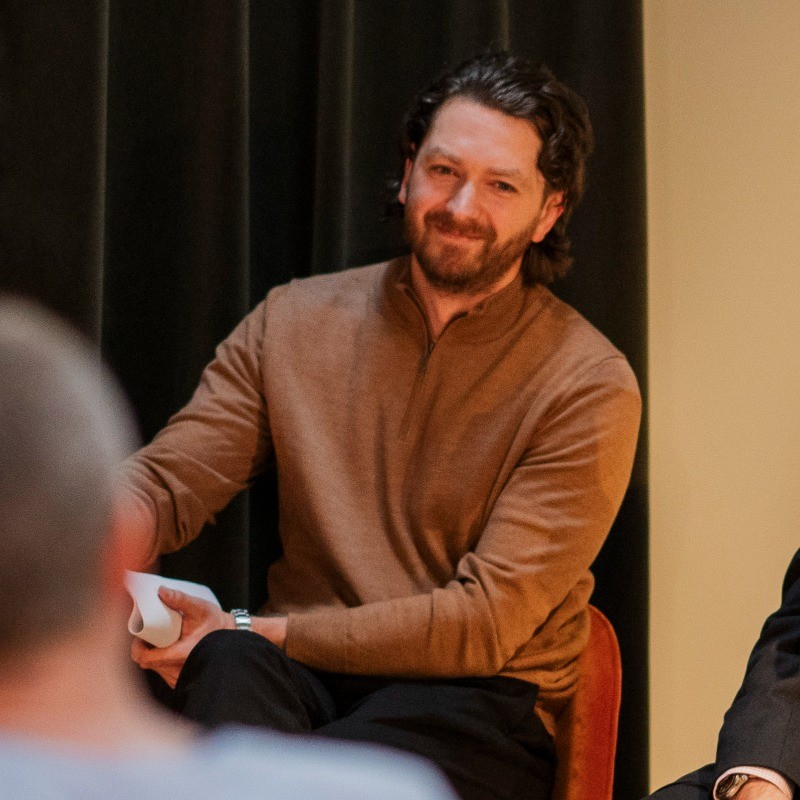
All right, Happy New Year, everyone. Thank you for joining us in our first episode from the experts in 2021. But overall this is our 12th episode so we are making headway with this series. With me today are Colin Day, our managing director of EMEA and APAC over here at Oktopost and a very special guest, our great friend, Andrew Davies. Andrew is our. Not our I wish, but he's the associate director of Digital marketing and Creative Services over at capco. And today's conversation is going to be all about the impact of the digital transformation in the fintech space. I have no doubt that this is going to be one of our more interesting conversations to date and I'm really excited for this one. Just as a quick reminder, everyone is on mute if you have any questions at all, comments, concerns, There is a Q and A box and a chat box on the zoom screen. Feel free to drop those in there. There will definitely be time at the end of the webinar to get around to them. So between the two of you, I know we have a lot to cover today. Let's jump right in and I want to get started. Oh no. What happened? There we go.
1:31
Andrew Davies
I
1:34
Shanie Zimerman
2021 already, huh? I want to get started with Andrew. I'd love to hear a little bit more from you. Being in that financial services space, why do financial organizations need to adopt? Why do they have to adopt this digital transformation?
1:52
Andrew Davies
Well, yeah, look, where to start? I think let's just take 2020 for a starting place. Right? I think COVID 19 has caused a fundamental shift in the way that all organizations have to do business. I think if you consider there's probably a knee jerk reaction that we saw around March time, a lot of businesses wanting to shut down. But then as soon as people settled and rather quickly into what was considered the new normal, everyone realized that business can continue. We just have to change the way we do it. For someone who's worked in digital marketing for a long time, it was sort of clear to me the rise of social media over the past 10 or 12 years, that was really the place to go. Let's take this thing online. Let's take all of those relationships, everything we used to do person to person and face to face and really try and get those online. So I think there's been a. It's been coming very much like the demise of the high street. It's been coming, and COVID 19 has been the catalyst that's really forced that change much quicker than anyone expected.
2:56
Shanie Zimerman
I think the digital transformation was definitely a theme in 2020 of what we were speaking about in really all of the webinars. I think everyone was speaking about it in all of the content. It's like you said, Andrew, it's something that was expected. It's something that everybody knew. All organizations knew that they needed to transform and knew that they needed to adapt. But I think everyone was kind of thrown into it headfirst. We didn't have a choice. I think all options for maybe a little bit of this and a little bit of that were eliminated and we needed to go digital completely, including organizations and industries that might have taken a little bit longer to adopt. Traditionally, yes.
3:42
Colin Day
Shani. I think it was going to happen. Right. Like, it's just a matter of how long would it have taken to happen without the pandemic. Right. I mean, I can remember 22 years ago, and the reason I'm bringing up that date is my oldest son is 25. I know I don't look old enough to have a 25 year old, but let's not talk about that. But My oldest son's 25. And I can remember standing. Yeah. Next time I can remember standing in the kitchen of a good friend of ours, like, having somebody lunch and the kids playing away. And we're in the kitchen and he's like, Colin, what's this thing called? The Internet? Yeah. Do you think he calls you Colin? Yeah, he's a friend of mine. Right. So he calls me by my name. Yeah, but Colin, it's like his name's Richard, but I'm not gonna say his surname. We'll protect that. Right. But Richard's like, col. This thing called the Internet, what is it? And do you think it'll ever take off? Do I need to put my business on it?
4:41
Andrew Davies
Right.
4:43
Colin Day
It's taken, you know, it's taken 25 years for everyone to grasp the technology in front of them. Right. The Internet's been around for a couple of decades now, as Andrew said, social. He's been involved in it for what, the last 10, 12 years?
5:01
Andrew Davies
Andrew.
5:04
Colin Day
So it's been there for a while. It's not something brand new, but to some organizations it is. And they've had to get on the wagon and get on the wagon very quickly because the way that their buyers are engaging with them and the way that their buyers are interacting has totally changed and it's had to.
5:27
Andrew Davies
There's something really interesting there, Colin, and I think there's a generational element to that as well. I mean, look, having worked in consultancies past, what, six years, I think there was a certain demographic of a few people who didn't really want to embrace digital or social media to a certain extent. Really thought they almost saw themselves. They'll probably get to the point of retirement before they really have to embrace it. And again, Covid changed that massively. I think what's really interesting is they were of a level and of a more traditional approach to doing business, that they had unbelievable relationships face to face. They had huge contact books. They were the original networkers, the original salespeople.
6:07
Colin Day
Rolodex, right?
6:08
Shanie Zimerman
Yeah, I was going to say the Rolodex.
6:11
Andrew Davies
They just never took that and put it online. And it's been quite amazing this year alone just seeing how many people have started embracing sort of a few of the initiatives we've got at CAPCO anyway. But the results that they managed to achieve so quickly just by adding simple things, adding connections and sharing content and you see, you see such a big shift in the way that that's all done. And also, I mean, the results are incredible when these people share content.
6:34
Colin Day
And also.
6:35
Shanie Zimerman
Well, it's also because everyone is there.
6:38
Colin Day
Yeah, that's what I mean.
6:38
Andrew Davies
Right.
6:39
Colin Day
We've all got one of these, right? And guess what? It's. It's always on. Yeah, always connected, right? So, you know, as a. Don't, don't call me a B2B buyer, right? I'm working for an organization, right? It's like, you know, Andrew, really the communication that CAPCO is trying to have with its audiences is more person to person, right. Rather than brand to person or brand to brand, right? It's like more business to business. But look, whether it's my personal life or whether it's my professional life, I'm more. I'm hyper connected, right? And I'm hyper connected when I want to be, whether it be at midnight, whether it be at 2 o' clock in the morning, whether it be at 4 o' clock in the morning, right. Or whether it be now at 5 o' clock in the afternoon, I can pick up my emails, I can, you know, I can check my bank balance, I can place an order for this, that or the other. So, you know, brands and organizations, irrespective of industry, have had to wake up to those changes, otherwise they die. On the vine, right? It's like, do you want to be the next. Do you want to be the next Blockbuster? Yeah. Do you want to be the next Woolworths or do you want to be the next Kodak? Right. It's like brands that were with us for many a year but because they couldn't innovate, it was innovate or die
8:00
Shanie Zimerman
100%. And I think all of this also brings us into the globalizations, how they really have prompted fintech companies to adapt digitally. Not necessarily adopt, but how they've forced us to adapt. You know, we have Covid. We have global human rights movements. There's been so many things and events that have occurred and you know, how has that really prompted us to be thrown in and be able to adapt to this new. The new normal? Now it's normal, right? 2021, it's normal already, it's not new.
8:41
Colin Day
We'll find some assemblance of normal somewhere, Shirley, don't worry. I'm not sure how long something has to be going on before it's classed as normal. Yeah, but I mean, from my viewpoint, Andrew Slack, you know, feel free to chime in, but if we're talking about financial services or even financial technology companies, because they're servicing financial services organizations, their end client is the bank or the insurance company or the hedge fund. They're working in a regulated industry. And some of the. Andrew spoke earlier on about maybe it's a generational thing, but some of the reasons that financial services firms haven't been able to maybe adopt social or adapt to social as quickly as others has been that specter of regulation and how do I comply with it? And if I don't comply with it, guess what, there's all kinds of implications. So guess I'm going to stick my head in the sand. Yeah. And I'm not going to worry about it because the ramifications of me getting it wrong probably outweigh in my mind the benefits of getting it right. Is that what you'd see, Andrew? Is that how you define it?
10:05
Andrew Davies
Yeah, definitely. I've just written down on the pad next to me, I think there's two points. I think there's regulation, I think there's confidence. I mean, during my time at apmg I was amazed at how many senior leaders I would talk to and would be terrified about doing it wrong. They would be really scared just actually just to send a tweet. It's incredible that they. And again, I think it's semi generational, but they would go to Meetings, sales meetings, pictures, presentations and know exactly what to say. But the second it was a new form of communication, something that their kids did and they weren't necessarily doing, was suddenly terrifying to them. Now look at anyone who's heard me talk about Oktopost before knows I'm wax lyrical about what you guys do and how we've used it at capco. But to address the confidence point, to address the regulation point, having something like an advocacy dashboard, having a message board of pre approved corporate content that people can share is really that first step into this journey and adapting the new method of communication and new ways of actually talking to the, to their audiences. And again, Colin and Shane, we talked about this the other day, but you see very quickly the people who are natural communicators offline, when they start embracing this kind of technology, they soon get the hang of it. They soon show a few things that are pre approved. They see the engagement, number one, they love the numbers they see because they love seeing, okay, well I got this many. I had so and so from whatever business engagement with that content. They soon start becoming thought leaders in themselves and they get more comfortable with those platforms. And again, look, Colleen, we've spoke about this numerous times and when we work together we've spoken about this. Having the buy in again from your risk team, from your legal team by adopting this kind of software is so helpful because once those conversations and those relationships are set up internally, we can continue marketing as we would do, which is with confidence, which is creative ideas and really communicating the points. I think, look, it's all stepping stones. The software without doubt helps us to achieve that.
12:03
Colin Day
Yeah.
12:03
Shanie Zimerman
Andrew, whenever I think some of the pushback.
12:05
Colin Day
Oh, sorry, sorry, Shanique, go on.
12:07
Shanie Zimerman
I was just gonna ask, do you think some of the pushback also comes from knowing that if it's on the Internet, it's there to stay? That it's like a very permanent.
12:18
Andrew Davies
Yeah. Digital tattoo.
12:21
Shanie Zimerman
Yeah.
12:22
Andrew Davies
Yeah. I certainly don't think the mass media help when they go digging up numerous posts from the past and that does scare people and I can understand why. But look, a good marketing or a good communications team will let their stakeholders in the business know that they are the first point of contact if they're worried about what to say. And they will show an advice from that.
12:44
Colin Day
Sometimes though it comes down to, you know, if you look at the regulation aspect and therefore layering compliance into that, sometimes it's the compliance team concerned about data leakage. Right. That's why we lock down USB ports. That's why you can't get access to this, that or the other. We've worked in organizations together, Andrew, right. In the past where social channels have actually been locked down as well from within, inside the four walls of the organization because we don't want employees to necessarily put the wrong message out. There goes a little bit hand in glove, right. With what you say about not necessarily knowing what to say or how to say it. Right. If you take that back to a compliance officer, that's an alarm bell. It's like ringing in their head. So I always think about digital transformation or any transformation in three pillars, right. And people have heard me talk about mindset, skill set and toolset, right. So first of all, I need the mindset of the organization to align behind a digital strategy and behind social. Right. And I need the skill set to be able to go and manage that program. But the tool set can help you conform to the compliance rules and regulations that you've got within the organization. For example, the organization we used to work at together, Andrew, so when we were challenged with not being able to use Twitter, for example, from within the firewalls of the organization, tools such as Oktopost allowed us to work with inside that compliance framework because it was Oktopost that was making the connection to Twitter and then it was you in the corporate marketing team that were managing the message, ensuring that the message was compliant that went out to staff for staff to share. So I'd always think about that transformation as being, do I have the right mindset, Do I have the right skill set to support it? And then is there a tool set that can help me enable it?
14:59
Andrew Davies
Yeah, look, you flashed your mobile to us earlier on. I think that's been one of the biggest problems as well. Right.
15:04
Colin Day
Very nice one, Andrew. It's brand new. Do you like it?
15:08
Andrew Davies
You got it. If you restrict access to social media channels to your own staff, they'll just go on the mobile. And I would much rather give them a safe place where almost a sandbox where they can go and see the types of messaging that you are sharing as a corporate brand and start to learn that way and then become a lot more comfortable with it. And I think from a. I've seen this, especially saw this at kpmg, I found that when I was doing things like stats and mandatory training and it was about communication, the way that it was sort of go through the social media policy would scare the crap out of people. They would be very like scared to start using the platform because it was so strict. And the level of Punishment for someone saying something that wasn't approved would. Yeah, would scare the life out of them. And again, if you, if you have the platforms that allow compliance to be involved and it shows compliance that there's a safety net and a responsible team using it, then the language used even within those sort of social media or comms policies gets a lot lighter. And that's when you can start empowering people when they feel empowered to go and use the platforms.
16:14
Colin Day
I think that somewhat talks to that last bullet. Right. As well of cultural nuances. It's like you talk about what's controlled or what's contained within side those policies and procedures. Look as organizations, we have employees around the world like cap. How many countries is CAPCO present in, Andrew?
16:39
Andrew Davies
They'll shoot me for this, Colin. I think 27 officers is what we've got.
16:44
Colin Day
I'll put you on the spot. Right. I'll put you on the spot. But I bet you some of those offices are in the United States and some of them are here in the uk, right?
16:52
Andrew Davies
Yes.
16:55
Colin Day
Two countries separated by a common language.
16:59
Andrew Davies
Yeah.
16:59
Colin Day
Well, not really a common language. Right. Because the Americans use a lot of zones or Z's. Yeah. And you use a lot of S's. Right. Like so you know, as you're putting content and material out to your advocates to share, right. Like you've got to be wary and mindful of some of those culture nuances because you know, if you're putting content up there that doesn't resonate with them or Slack, you know, is full of spelling mistakes because it's got all these Z's all over the places or Z's all over places, right. It's like why am I going to take it and share it? Right? Because it's not going to resonate with my audience and it's not going to portray me as that thought leader. So there are those cultural nuances and cultural differences that you need to be mindful of and respectful of or we need to be mindful of and respectful of as marketers.
17:52
Andrew Davies
Right? Yeah, there's a really good point there around actually how you educate your advocates as well start embracing this kind of tech because you will without doubt, whenever you start one of these programs and employee advocacy program will have people who are obsessed with just the total number of times they can share a piece of content. They won't share happy that content for their own audiences. They'll just share like crazy. And we've had people do it the countries and like Look, I've shared 70 plus posts like wow, why?
18:20
Shanie Zimerman
Why did you do that?
18:24
Andrew Davies
So there's always piece there as well.
18:28
Shanie Zimerman
I think it's always about education. I think especially when it comes to social media, it has to be ongoing education. It's such a dynamic and ever changing industry and focus that, you know, you have to constantly stay on top of the regulations, the nuances that go with each network and it's always about education. So I think we speak a lot about social media. Well, we speak a lot about social media being really at the forefront of the digital transformation and I think rightfully so. But what are some other effective digital strategies that you have seen in the fintech space?
19:14
Andrew Davies
Look, I think, look, I think it's a really good question and again, I think a lot of this has shifted as a result of COVID we from capco. The regional marketing teams have done an unbelievable job over the past few years running events, being part of panel events, etc. Which are really good for client engagement. We started moving to more smaller client roundtables. So we're actually adding a lot more value to the individuals who are attending. That's gone. I mean we can't do that anymore.
19:44
Shanie Zimerman
I think the last roundtable Oktopost had. Andrew, you were in Tel Aviv for that, right?
19:50
Andrew Davies
I was, yeah, very lucky. But all of that changed. So you've really got to go go back to basics which is how do we add value to people? So look, you guys will have heard me talk about this before, but we have a very simple model for content at capco which is that we should try and do one of what we call the three E's which is educate, enlighten or entertain. Now as long as all of our content does that and how we distribute that digitally, as long as we hit one of those three Es, we consider ourselves to be adding value to an individual. Now look, I would not recommend anyone goes and tries entertaining in the financial service industry because it's just not geared that way. But to educate or enlighten is quite an easy one. We should be able to tick off as SMEs within our field for sure
20:34
Colin Day
and just building upon some of that, right Andrew, like you mentioned, events are a little bit gone by the wayside, right? And if you looked at a marketing budget, certainly in the financial services world outside of people, events probably used to be the biggest line item on a marketing budget. Now it's probably technology is the second biggest overtaking events. So how do I get the most value out of that marketing technology stack? How do I break down some of those silos? And how do I get the data for all of the marketing engagements that are taking place and all of the marketing touch points that are happening? How do I get that data to flow through the technology stack so I can eke out that value that you spoke about? To me, that's some of the change that I've seen over probably the last five to six years. Shani is more of a focus on ensuring we've got the right foundational data. Yeah. And then ensuring that the tech stack is able to talk across itself.
21:47
Andrew Davies
Yeah. So this is a very good point and a very good question and one I could probably talk for too long about. So I'll try and make it concise. Within fs, I think you have time talk away within fs which would financial services, which would always or normally be considered as B2B. I think when I've dealt with stakeholders anyway, to start off with, they expect to see B2C numbers and that comes from web visits, that comes from follower basis across social event invites, email opens, all that kind of stuff. They expect to see this real high level data that is not going to happen in financial services. So one thing we have to educate quite a lot on is that you don't want to be seeing 1 million impressions. If we're reaching 1 million people with a piece of social media content, it's probably gone viral for the wrong reason. Or our paid ads are just reaching a market or a target audience which is too big because we know there are certain influences within banks or wealth and asset management firms and we know there are only certain people who will own the budgets and they're the ones we want to target. So our numbers start looking a lot smaller in terms of how many people we want to reach and how many people want to engage with and that that level of education has to be delivered to those individuals. First of all, it is not a big numbers game when it comes to impressions and audience
23:08
Shanie Zimerman
quality over quantity.
23:10
Andrew Davies
100%.
23:12
Shanie Zimerman
Yeah.
23:13
Andrew Davies
Colin, your point around data. So first of all you need a starting point. You need to understand exactly what is the current data you are seeing when you are just running what I would call business as usual activity, which is an ongoing events kind of ongoing content kind of for thought leadership and social kind of. What does that look like? Once you have that starting point, you need to ensure that you have your marketing tech integrated. And I cannot emphasize that point enough. We at Capco fair to say we don't have huge budgets. I don't think we need big budgets. But what we've been very clever at doing is identifying the marketing technology that we can sync up together and really start to demonstrate the data and the value that we're adding. So we use HubSpot as a CRM system. HubSpot is connected into Oktopost. So if we have a contact within CRM and the CRM system and Oktopost are able to tell us which social media post from Oktopost that use or that contact is engaging with. So we get all the information, we can see what campaign it comes from, we can see the type of engagement they've had. Is it a like, is it a comment, is it a share, is it a link click? If it is a link click, we can start tracking that all the way back to the website. And from that point HubSpot connects with Sitecore, which is our content management system. And we can start to see the user actually move through the website and what content they're engaging with. Now once you have that, which is an incredible level of data, you can start adding more value to that individual because you can tell what their preferences are. You can see if they're looking at banking and payments content, you can see if they're looking at wealth and asset management content. And that allows us to then start personalizing content for that individual going forward, whether that's personalization through the website. So when that user hits the website again, we're showing them what we believe they will think is new and relevant or email content. Are they looking at open banking? Are they looking at who the next Monzo is? And if so, then we can start sending them that content. So it's sort of three piece between understanding the audience, having the integrations and then offering that personalization and value.
25:13
Colin Day
What it really comes down to in a nutshell, Andrew, is it's all about the cx. It's all about the customer experience these days, whether it be personalizations like as they land on your sitecore page, whether it be personalization from the email content that you're dropping that individual into based upon what they've been engaging with you on social. But it's all really about how do I go about enhancing yet the customer experience?
25:44
Andrew Davies
Yeah, there's an incredible social media agency called Social Chain and they do a podcast called Social Minds. And on the intro to that podcast there's a little snippet, little voice or audio snippet. And the lady says the only metric that matters is convenience. And that is so true. So, so true. Everyone's looking for convenience. You can do that through your content delivery as well. Yeah.
26:10
Colin Day
It comes back to this again, Right?
26:12
Andrew Davies
Exactly. We've done a lot of stuff recently to our website to make the user journeys much more convenient. How do people find the content they want quicker? And it all comes down to convenience. And personalization allows you to do that as well. Right. If you know someone's interested in banking and payments, service them or serve them banking and payments content first.
26:32
Shanie Zimerman
Sure. I think all this to say that, like you said, you need a starting point and a starting point can't be the finish line. You have to develop a strategy. You have to develop. You have to understand the data and work with both of those in order to be able to succeed. And just like the last bullet point, it's not a marathon. It's a marathon and not a sprint. You know, this is something that takes a little bit of time, takes a little bit of nurturing, and I think that's across the board for any digital strategy or any digital effort that you're putting forward.
27:08
Colin Day
Yeah. I also think, though, Shani, before you go on to the next slide, I also think on that last point that it's a marathon, not a sprint. I know Andrew and I have spoken about this previously. As you roll out your social strategy, don't think it's the golden bullet. Right. Don't think it's the be all to end all. It's. It may turn out to be that. Right. Or it may turn out to augment the rest of your marketing strategy to make your marketing strategy that. But it takes time. You're not going to see results in a day, in a week, maybe not even in a month or two, or huge results. It takes time for the strategy to bed down and for people to get on board and accept it.
28:02
Andrew Davies
Yeah, the value point there, Colin. And understanding that it takes time is so true within financial services. You are not going to get someone in their first visit your website, download a paper and immediately convert to a lead, or contact you about request for proposal or new business. I mean, it takes time. And one thing I don't think we've touched upon much yet is trust. You have to build trust with that individual. And trust is so easy to lose through digital as well. Send them one email that doesn't resonate with them, they don't open it. The chance of them opening another email is pretty slim this day and age.
28:34
Colin Day
They can just click the spam button and they'll never see you again. Right. Or unsubscribe.
28:39
Andrew Davies
We know what LinkedIn's like these days, which really is to A certain extent they are pushing their organic, especially business page content. They're not serving it anywhere near to the level they served it a couple of years ago. I think we're down in terms of corporate channel reach down something like 61% year on year. So they're really trying to push us towards that paid element. But what we've been able to do through advocacy, we're generating more engagements than we have ever generated before through our advocate channels. I mean, advocates now drive more engagement overall than our corporate channels. We've got big corporate channels. Our LinkedIn followers is like 150,000. It's a massive amount. But LinkedIn doesn't help us reach those individuals. We really have to start focusing on the deep relationships we always say loyalty and rapport in capco and how our advocates, our employees, can put their relationships online to drive that.
29:36
Shanie Zimerman
Colin needs to go dance in front of his light for a second. Sorry, Colin's back.
29:41
Colin Day
Apologies didn't pay the bill.
29:46
Shanie Zimerman
No, it's true. It's the people to people aspect. It's not. It's people trust people. People don't trust organizations, unfortunately. I think it's been over the years and I think over time and over digital, you know, organizations have kind of lost their. Their charm. And the charm comes from these individuals and the thought leaders and the people who can portray the organization in a positive light and speak positively. And I think that that's where we see advocacy really taking the lead. So not just social media in the digital transformation, but putting your employees first in the digital transformation.
30:32
Colin Day
Yeah. So Shani, on the trust element, right. You know, I love a good statistic. Right. It's like me. Yeah. Statistically, it's like, you know, as I've done my research on this. Right. Statistically, 92%. Right. 92% of people. Right. B2B buyers will trust recommendations from friends and family versus 47% that will trust recommendations or advertisements coming from a corporate brand. Right. And then so that just speaks a little bit to what you and Andrew were saying there. Right. So Andrew, just going back though, on the, on the reach side of things from, from an advocate perspective. Yeah. So what, what did you say? Capco's LinkedIn following corporate following was 100,000 plus, right?
31:22
Andrew Davies
Yeah, 150,000. Yeah.
31:25
Colin Day
Have you done any analysis on what the overall reaches of your advocates.
31:31
Andrew Davies
Reach of advocate on the spot. Again, you know what? Not so much what we. And there's a reason for that, which is because we look more at what the advocates doing in terms of the Actual what I would consider to be a meaningful engagement. So are they connecting with the brand? Are they connecting with their individuals? But more importantly, are they actually coming through to the website and doing what we wanted them to do? So we have a rule around don't share anything unless you know the objective and know how to measure it as well. And we look for that deeper meaningful engagement. So that would be someone reading some thought leadership, maybe even downloading the report, at which point they become a lead. Also, careers is huge for us and talent acquisition. And look, you guys have data from me from a couple of years ago where it goes back to your point, Colin, where when our advocates were sharing the same content that we were pushing out for careers ads, when an advocate or an employee shared it, the traffic that went through to the website was performing a career search at 51%. So 51% of all traffic from employees performing a career search. When we had the ad set up, and this is across Google, Facebook, LinkedIn and whatever else, it was somewhere around 3%.
32:42
Shanie Zimerman
Wow.
32:43
Andrew Davies
The recommendation from knowing someone from a friend or a connection is so much stronger. I mean that we see that even now, not gone away. I think that's been a huge driver behind a big push for us in terms of employee advocacy.
33:03
Colin Day
Yeah. That's some amazing statistics, right? I mean, you just look at the differential, right? 3% to what, 51%.
33:15
Andrew Davies
Yeah.
33:16
Colin Day
I was gonna. You know what I've seen in some of the organizations I've worked in, Right. Is more like a seven fold increase. Well, that seven freeze is only 21. So you're way above that benchmark, my friend.
33:32
Andrew Davies
Yeah. And look again, it comes down to having people embrace that kind of program who've already got good relationships offline and face to face. They can take them online so easily and moving outside of financial services a little bit. We saw this when I worked at Nuffield Health when we had our huge gym chain. You would go and visit these gyms and they had just amazing atmosphere in the gym. As soon as you walked in, there was a cafe there. Pts would be chatting to their members. They'd be chatting at reception. And it was incredible. I mean, this is when Facebook first started getting really big and everyone was joining. We just told them, take that culture and just put it on Facebook and chat the way you chat to them. Well, yeah, in the gym. And what happens, you start growing online communities. Just trust and building those relationships.
34:28
Colin Day
It's the herd.
34:29
Shanie Zimerman
Social allows for that.
34:32
Andrew Davies
Social is the perfect place for that.
34:37
Shanie Zimerman
So as kind of the last topic that I wanted to speak about and just really bring this all together. You know, we know that social isn't going anywhere, we know that advocacy, because he isn't going anywhere. But what else do we see in the future for the future of digital and fintech?
34:55
Colin Day
Get our crystal balls out.
34:56
Andrew Davies
Right? Yeah.
34:58
Colin Day
Shani, when we give you the answer to this as well, can you quickly write down the lottery numbers for the week?
35:04
Shanie Zimerman
Yes,
35:09
Andrew Davies
Again, I think that's. Yeah, it's such a big question. The next six to 12 months are going to determine this. I think quite clearly for me, I think there's going to be a huge appetite from everyone to get back out into the real world. So I think you'll see what we saw, similar to what we saw at the start of the pandemic with everyone starts joining webinars. Everyone's on every webinar, everyone's on every zoom call. We've seen in the past three months. The attendance rates have started to drop down for that. I think we'll see the same with face to face. People will want for a certain amount of time to go to all the face to face events, then it's going to drop back to convenience. Like, do they actually travel on the Tube for an hour to attend a face to face event when for the past 18 months they've been sat at home and doing it online
35:53
Shanie Zimerman
and effectively doing it effectively online.
35:57
Colin Day
Some would argue, right, that virtual events aren't necessarily that effective. I mean, it's like, you know, it's horses for courses. You're always going to get people to say yay and always get sorry.
36:06
Shanie Zimerman
I guess it depends what the objective is, of course.
36:10
Colin Day
Obviously. Obviously, these, these virtual events are fantastic, Shani. So I didn't mean to, you know,
36:19
Andrew Davies
I always have to take it back to value. How are we going to add the most value to the individual? No matter what format it is, as long as you're adding value, they're going to come back and they're going to remember you or your brand for doing that. And that will be the real telltale sign. So obviously we know digital is not going anywhere. If anything, it's only going to grow. What happens and what platforms die off and what ones come out. I wouldn't like to make that prediction. I think we could probably say the big three, LinkedIn, Facebook, Twitter and everything that Facebook own. They're not going anywhere. They're certainly not going anywhere because again, they provide people with so much convenience. I mean, they're basically telling me what clothes to buy based off my search history 100%. It's just convenience. And when we really start to nail that down within B2B or financial services, which we're going to be able to do as people share more online and we understand more about them and what they're interested in, again, we're going to be able to provide that convenience. And that convenience for us is giving them value.
37:21
Colin Day
Yes. It's the Uber moment.
37:22
Andrew Davies
Right.
37:23
Colin Day
Talking of convenience. And with that. Right. It's like technology is just the enabler. Right. Like it's just the thing. And I say just right, but it's the thing that enables it all. So what's going to happen? There has to be more and more interconnectivity of that technology. Yeah. And what I mean by that is it's no longer acceptable for data to sit in silos.
37:57
Andrew Davies
Right.
37:57
Colin Day
In order to give that value that Andrew spoke about. Right. And value can mean different things to different people. Right. But in order to give that value, you've got to be able to receive the data, you've got to be able to read the data, you've got to be able to make informed business decisions based off of the data that you've got. And we live in the era of data. There's more data being produced every second now than there was every second an hour ago. Right. It's forever growing. So we've got all of this wealth of intelligence that is so powerful to us as marketers. Whether we're in financial technology, whether in financial services, whether we're in hospitality, it will come back. Whether we're in whatever industry we're in heavy manufacturing, we've got all of this data that is so powerful to us as product marketers, as marketeers, as digital marketers. Whatever field of marketing you're in, it's all about how do I extract it, how do I move it from one system to another and how do I inform myself. So with that, I think there's going to be more reliance on machine learning technologies and capabilities. There's going to be more reliance upon artificial intelligence in order to be able to just sieve and read through and analyze that data. We've done some of it with Oktopost, actually. Last year we released the AI Message Generator, which allows you to take a blog post and literally create tens of pieces of social content off of the back of that in literally seconds. That's just the one use case. And there are many, many, many others sitting out there waiting to be discovered.
40:03
Andrew Davies
The point on data, I don't think we can underestimate at all especially in financial services which is majority of people are accountants, they love numbers. So as soon as you can start extracting that data and demonstrate that data to them and sometimes you have to work in different formats. Some are going to like raw data on an Excel, some are going to like infographics. But as soon as you start showing them that data, they do really listen to it. And that's where things really start to change for marketing. So at kpmg I've seen it at capco, once you can start presenting the value and let's say return on investment and I'll always say that needs to be financial and non financial. Once you can start proving that with the data, you're going to start unlocking the budgets.
40:42
Shanie Zimerman
Yeah.
40:43
Colin Day
And sometimes to help enforce change. Right Andrew, I mean I know we've done this on several occasions in the past, right. You and I slack you have to demonstrate what good looks like. Right. So you know some of the simple things. Right. It's like find a peer organization. Yeah. That is doing better than you're doing or someone in an adjacent industry that you want to go in the mirror. Right. And then look at the results of what they're doing and serve them up to leadership and say look, you know what this is what good looks like. This is where we are, this is where they are. And these are some of the baby steps or incremental steps that I can put in place in order to take me from point A to point B. But Shani, for me it all revolves around the data and it all revolves around the technologies that we can put on top of that data in order to read it and simulate it.
41:43
Shanie Zimerman
Agreed.
41:44
Andrew Davies
There's one more thing I would always say as well. Don't be afraid to learn from the mistakes as well. Like if tactics you are trying, if the data starts to go south and isn't as you see, then take it as a learning, take it as education. Obviously don't repeat your mistakes. And the way that digital has gone, I mean look, you know how fast the news agenda shifts across social and digital and tactics and effective tactics change just as quickly. Honestly, what works today might not work tomorrow. So don't be afraid to show that data. And again comes back to your point, Colin. If you have that data you can win the debate or win the argument. So yeah, having access to that data, knowing how to extract it and visualize it is so important.
42:30
Colin Day
Yes. It's no longer look, I've made product decisions in the past. Right. Where I've developed a whole new product line for a company based off of a gut feel and we put a multimillion dollar investment into that. You wouldn't get away with that. These days you have to have the business case and you have to have the data to support it. So why not in marketing?
42:55
Shanie Zimerman
Yeah.
42:57
Andrew Davies
There will be without doubt ways to optimize a campaign or a marketing tactic or as you mentioned, products by looking at that data. Absolutely no point in shying away from the failures. Pure education. But yeah, I was thinking about this Colin earlier on. We're looking at our 2021 and beyond plans at the minute for digital and I've had to move what was meant to be my presentation on it tomorrow backwards because it just, it needs proper time to look at the data. Like I don't want to base it on assumptions. I've got my assumptions, I've written those down. But if I can't back them up with data then they need to be proper
43:34
Colin Day
ways. People will start shooting bullets at you. Right. Or picking holes in it. And as soon as there's a hole, yeah, it becomes a chasm because that can pull it apart if you've got, if you've got problems with one part of the data. Right. It's like, you know, this is, this is a good learning of mine from the years as well.
43:49
Shanie Zimerman
Right.
43:49
Colin Day
If, if people can, can, can find fault in, in one part of the data set, they'll then start questioning the validity of the rest of it.
43:58
Shanie Zimerman
They'll question everything. Yeah. Cool. We have perfect timing by the way, guys. I'm really proud of you.
44:13
Andrew Davies
I think what four years of me and Colin chatting. We know exactly how.
44:18
Shanie Zimerman
I know. And me threatening you.
44:21
Colin Day
I had more hair back then.
44:24
Andrew Davies
I'm just stockpiling mine now.
44:28
Shanie Zimerman
So we have a handful of really good questions that have come in. I'd like to take just a couple of minutes and we can run through those together and make sure that the audience gets all of the information that they possibly can. So the first question regarding unlocking the budget, how do you provide the evidence and stats for ROI and B2B especially when deals can take one year to come through through BD front office and the initial engagement isn't necessarily attributed back to marketing.
44:58
Andrew Davies
Yeah.
44:59
Shanie Zimerman
I don't know if you need me to break that down.
45:01
Andrew Davies
Yes, that's from John, a good friend of mine from kpmg. I would take it understanding the objective. So if you understand the objective then you should be able to know how to measure it. So it's. If we're sharing an infographic that doesn't have a call to action to go through to the website. What we want is so you start looking at all the metrics that are to do with sharing and impressions. And I think as long as you understand that you can feedback on that and demonstrate that, okay, have I hit the objective with these measurement KPIs. Your point around long tail campaigns and tracking that, I think that's all about demonstrating that. First of all a digital touchpoint or a marketing touchpoint is how that lead entered the system. So we can do that through digital ads. We can do that through someone say an event promotion. They register for the event, they enter the CRM system, they attend the event and then how do we communicate with that person down the line? And Colin, your model of keeping people engaged and in the funnel in a previous role is still, I think one of the best I've ever seen. So I'll let you go into that in a bit more detail. But don't be afraid to call back in a year's time and say, right, well this lead was generated through digital or through marketing because that is their first touch point. How you continue to engage that person over time, how you look at I guess the relationship strength. Are they having more touch points with our brand as a result of coming in from day one? Are they opening more emails? Are they clicking more emails? Are they engaging with social content? Are they connecting with more people? More of our advocates. So it's just really building up the picture to say that all of our marketing tactics over time have eventually led to being to Capco or whatever brand you work for for being front of mind for that individual. And there's more tactics to that. I think there's more tactics when you look at account based marketing and how you can have more of a halo effect if you are going for a pitch with a certain organization, you can start using tactics like LinkedIn advertising to actually target more people who would be in their influencer group and their peer group. So that should they mention an RFP and your company's mentioned as going for it might trigger that. Oh well, I saw a video promoted from them the other day. So just always keep in front of mind. But it comes back to the marketing tech. Make sure you.
47:17
Colin Day
Yeah, it comes, it comes back to being able to track. Right. All of the marketing tactic engagements right in a single place.
47:28
Andrew Davies
Yeah, yeah.
47:30
Colin Day
And that, you know, whether that be social, whether that be an event, whether it be whatever it is. Right Andrew, it's, you've got to be able to capture all of those engagements and then feed that back into the map or into CRM or ideally into both.
47:51
Andrew Davies
Yeah, definitely having that the records. I mean, CRM connected to social media is fantastic. And that's normally the first touch point and how people enter the CRM, CRM connected to the website. So when that person comes back to the site, you can see what they're engaging with. Because you might be able to relate the actual sale to a topic that they keep viewing on your website and through your thought leadership. And at that point, you're always going to have salespeople who will claim the sale, but you're going to have the raw data. You're going to have the evidence that they are regularly coming back to your site or social.
48:24
Colin Day
But then as well, that brings up a good point. Right? So what if the salesperson claims that they were the first touch? Why does it matter? Right? Because that's sellers like their egos to be massaged, right? If there are any salespeople listening to this call, I apologize, but I am a sales leader myself and if any of mine are listening, I apologize. But salespeople like, it's a sense of ownership, right? And it's a case of, hey, I need to feel that I've bought that home for the company, right? Let them do that, Let them do that. It's when you go up above that, right? And when you're trying to demonstrate the value to the organization, not to the individual salesperson, but to the organization that marketing is bringing and marketing is contributing, then that's where you need that statistic, right? I mean, the organization that you and I keep talking about, right? Andrew, you know that as a senior marketer there, my compensation was actually tied yet to contribution to pipeline and contribution to close one business. Does that not sound like how we would compensate our sellers yet? So in order for marketing to get that seat at the table, sometimes we need to think about the way that we compensate like marketers as well, because that then you've got skin in the game with the sales organization.
49:54
Andrew Davies
Yeah, there's a really good point there as well. Right. So who claims responsibility for the sale? First of all, build a strong relationship with your sales team. Get to know them, understand what the actual client that they're trying to sell to, what are their problems? How can we address their problem? And then the best thing most of all is marketing sits on a ton of data. So all of the marketing initiative that you're doing suddenly becomes like business intelligence to them. You can start saying okay, well, X person at X Bank is actually interested in this. Did you know that? Because the chances they probably didn't. And we can tell that through being able to track that individual. And look, that's what again, we've done effectively at capco. We can offer real good business intelligence and business insight to sales through the marketing data. And yeah, they'll soon start giving you credit when you're the reason behind that.
50:47
Shanie Zimerman
I think we can all agree it's hardly ever the case where it's that first touch or that one touch in anything that we're doing. If it's with a marketing resource that we're putting forward, a webinar, an ebook, or if it's our sales team that that would lead to a conversion and that would lead to a closed one and that would lead to a customer. I think it's all about just incorporating every single aspect of your efforts into that buyer's journey and understanding the most effective touch points along the way. And hey, that's all in the data. Yeah. So a couple more questions, Andrew. What's the biggest challenge you face when educating the business and team on the value of digital? Oh,
51:38
Andrew Davies
honestly, probably the biggest challenge is, first of all, you need to understand what the business is trying to achieve. Because I think it's very, very easy for marketers to almost go off on one, go off on a tangent and think that they understand what the objective is and they might have missed it entirely. And I would always understand the objective and then know how you're going to measure it. Because as soon as you start demonstrating to the individuals across the business that you are adding value and that you can measure that value and then they'll be bought in. There will always be stakeholders who just don't want to listen. Not at my current role, but I've heard it in previous roles where very, very senior people in the firm said to me, we don't get paid enough to do digital or social media. Which is just, yeah, I mean staggering. But more fool them now that after the year we've had in 2020.
52:29
Shanie Zimerman
Yeah.
52:32
Colin Day
Andrew, isn't it like, I'm sorry to jump in there, isn't it too, I mean that to add to that answer, right. If you take the marketing element of it, right, isn't it all about having an integrated campaign strategy? So social is just one or digital is just one part of that strategy. So I'm not showing necessarily the value that digital's bringing. I'm. I'm showing the value that marketing's bringing. And guess What a component of that is, is our digital strategy. Would you agree with that?
53:04
Andrew Davies
Yeah, I would. 100%. Yeah. Sorry, I was having another thought at the same time, which is if you are able to test both theories, be that the theory of someone in the business who's wanting you to help or wanting to prove a point against you, try their theory and try your own and then demonstrate the data side by side
53:24
Colin Day
and then to add. To add a second string to that, that response as well. Right. Like part of the digital framework that you're putting in. Right. Is really like sales led. Right. It's like if you think about the advocates right within side capco, what are they there for? They're there to run their book of business. Right. It's like some of the advocates, not all of them. So isn't this just part of a social selling strategy? And in this day and age, as you said, isn't social selling really just selling?
53:58
Andrew Davies
Yeah, we describe it as a mainstream business tool, which is probably wordy for what it is, but look, it's taking those relationships and putting them online. It really is as simple as that. And yeah, that will ultimately settle one way or another.
54:19
Shanie Zimerman
So let's take. We'll do two more questions if that's all right. We're nearing the top of the hour, so I just want to be conscious of time. Any courses or books you'd recommend for increasing digital knowledge?
54:34
Andrew Davies
First of all, I would listen to Colin because he really knows his stuff.
54:40
Colin Day
Thank you.
54:44
Andrew Davies
A book I read a few years back which is called Social Media roi. I don't know if there's a way
54:52
Shanie Zimerman
sounds like straight to the point, but
54:55
Andrew Davies
look, it covers all of marketing ultimately and that was really good book for me to just understand all of the KPIs that you can possibly measure, then understand how I can start putting those in a proper framework to demonstrate value. I can't think of the author's name off the top of my head. I'll try and dig that out and share it somehow.
55:14
Shanie Zimerman
I think another effective way.
55:16
Colin Day
Oh God, Jenny. No, go on.
55:19
Shanie Zimerman
Well, I don't. I don't read. I don't read books, but I do just not really digital books. But I think personally, an effective way to gain a little bit more understanding, a little bit more knowledge is since everything's digital, it's all public, it's all there. And look at what your competitors are doing and look at what the rest of the industry is doing. A quick Google search and a quick search on Twitter or LinkedIn for your competitors. And industry thought leaders. I think that'll help glean a little bit of insight into what's effective and just help you get a little bit more knowledge in that digital space. Maybe I should start reading books.
55:58
Andrew Davies
Yeah, I would expand on that point as well. Is that look outside of your industry. There is nothing wrong with working financial services and looking what Nike doing, what innocent smoothies are doing, what Paul Smith are doing because they have so many amazing tactics, especially from a digital point of view, which are easy to integrate into what you do within financial services. And remember that the B2C brands are engaging with individuals just as much as you need to. There is a really cool thing that Red Bull. I mean this is going back about eight years. Is it Tom Fishboon who does the little. He did one around Red Bull from a Red Bull speech about marketing once, which is 50% of people go online to waste time. So give them lots of really cool shit to do when they get there. And like I think you should apply that approach across every single industry. And yeah, I love that.
56:50
Colin Day
I don't know how I come back from that one. Andrew. I was gonna say I've got two books and one course, but maybe that's a lot of shit. I'm not sure Andrew. But so two books, one of them's got digital in the title and related to financial services. So good friend of mine, Chris Skinner, he's a commentator in the financial services space. Those of you that don't know him, good book. Doing digital. And it's really around how financial services firms themselves are physically changing from a digital footprint perspective. So not per se marketing, but just the industry in general. Going back to the cultural conversation of earlier, a book by an author called Kyle Hegarty. The book's called the Accidental Business Nomad. Really talks about cultural change and globalization and how that comes into play.
57:53
Shanie Zimerman
Play.
57:53
Colin Day
Great read because it certainly helps us from a marketing perspective to know who it is we're dealing with. And then from a course perspective, I'd always my go to would always be the likes of Forrester and the Serious Decisions brand. So any of their material is always a good shout.
58:16
Andrew Davies
Yeah, I think, yeah, just smash the webinars, smash the podcasts because they'll always be one nugget of information which you can take away and implement very quickly.
58:27
Shanie Zimerman
Absolutely. I thought we could maybe squeeze in one more question, but I think we are just at the top of the hour now. But if anybody has any questions, our contact information is here. Feel free to reach out to us. I'll speak on behalf of the guys that we're all willing to help. We're all willing to share our 2 cents. So feel free to connect. I want to thank you both again so much for joining today. I love this conversation. I think from the two real experts in this industry, it was really insightful, it was really informative. And I don't think you actually have to just be in the fintech space to learn a bit or two nuggets of information from the two of you. So this was really great. Thank you both again and thank you everyone for joining. We'll be back next month with another episode of from the Experts and I look forward to seeing you there. So thank you all again and have a great rest of your day, rest of your evening, wherever you are in the world.
59:28
Andrew Davies
Cool. Thank you very much, everyone.
59:30
Colin Day
Thanks, Andrew. Thanks, Jeanine.
59:32
Shanie Zimerman
Bye. Thank you, Andrew.