


B2B marketers know that LinkedIn is a critical platform for reaching decision-makers. Yet many struggle with a common challenge: getting employees to actively share company content. Let’s explore why employee sharing on LinkedIn matters, introduce employee advocacy as the solution, and provide a step-by-step plan to turn your team into engaged brand ambassadors on LinkedIn. You’ll see how empowering employees to share can dramatically amplify your reach, build trust, and even boost recruiting, all through authentic voices.
Why employee advocacy on LinkedIn matters for B2B brands
LinkedIn is where business happens.
In fact, 4 out of 5 LinkedIn members drive business decisions, making it a goldmine for B2B engagement. But here’s the catch: posts from company pages often have limited reach. Employees, on the other hand, bring personal networks that far exceed corporate followers – on average, your employees’ collective network is 10× larger than your company’s follower count. When employees share content, it doesn’t just add a few extra impressions; it taps into entirely new audiences.
Moreover, people trust people more than brands. According to the Edelman Trust Barometer, 76% of people are more likely to trust content shared by individuals than by official brand channels. In practice, an employee’s LinkedIn post can carry more credibility (and get more engagement) than the same message on your company page. In an age where buyers value authenticity and peer insights, an employee’s voice often resonates louder than a corporate message.
Brand messages shared by employees get 561% more reach than when shared by the brand’s own channels.
This isn’t just a vanity metric; it’s the difference between your content being seen by a few hundred people versus a few thousand. Greater reach coupled with higher trust is a powerful combination. When your team members share content, their connections are more likely to see it, engage with it, and believe it. The result? Higher engagement rates, more meaningful interactions, and a broader impact than your company could achieve alone.
What is an employee advocacy program?
Encouraging employees to share on LinkedIn isn’t a random act; itis part of a strategy known as employee advocacy. Employee advocacy is a programmatic approach where employees actively promote the company’s brand, content, and values through their personal social networks. In essence, your employees become brand ambassadors online. This strategy humanizes your brand, making it more relatable and trustworthy to customers. Instead of faceless corporate posts, you have real people – your people – championing the brand in their own voices.
At its core, employee advocacy is about empowering your team to share and engage. That means providing them with the content, tools, and encouragement to post about company news, industry insights, and personal perspectives related to their work. When done right, employee advocacy doesn’t come off as “corporate propaganda” – because employees add their unique take and engage in genuine conversations. This authenticity is key: posts feel personal and credible, which is precisely why they perform so well.
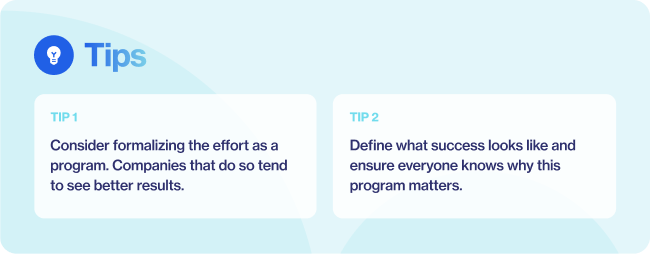
It’s worth noting that employee advocacy is more than an informal suggestion to “please share this.” Many companies create formal employee advocacy programs to support and incentivize employee sharing. These programs often include guidelines, training, and even dedicated platforms to streamline sharing. The payoff is significant: companies that invest in such programs see real results. (In fact, one study found that high-growth companies are over twice as likely to have a formal employee advocacy program in place compared to average firms – a signal that advocacy is part of a winning strategy.)
The bottom line: when you enable your employees to be active on LinkedIn, you’re activating a marketing force multiplier that’s already at your fingertips.
6 business benefits of employee advocacy on LinkedIn
Employee advocacy isn’t just a feel-good initiative – it delivers tangible benefits for your company (and for employees themselves). This section introduces the key advantages of having an engaged workforce on LinkedIn. From expanding your reach to enhancing credibility, here’s what a structured employee advocacy program can do:
1. Exponentially greater reach & engagement
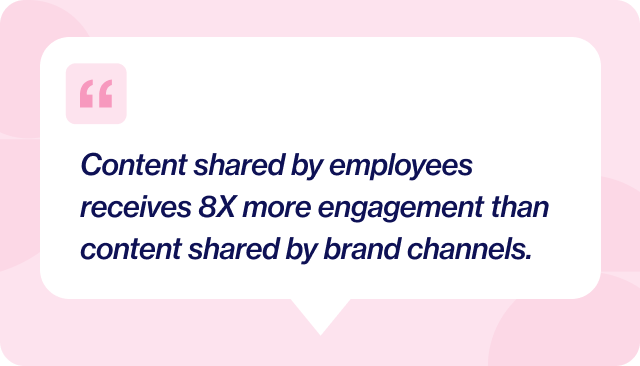
Content shared by employees travels farther and generates more interaction. For example, employee-shared content can get 8× more engagement than content shared on brand channels. Your employees, collectively, can reach networks beyond your corporate page, driving up impressions, likes, comments, and shares in ways your brand alone cannot.
2. Increased trust and authenticity
When employees speak, their networks listen more. Messages coming from real people are seen as more genuine. This boosts your brand’s credibility. Consumers perceive employee-shared posts as more credible and authentic, which enhances your reputation. In sales terms, 90% of customers trust product or service recommendations from someone they know, and that includes your employees when they share sincere endorsements or insights.
3. Enhanced brand awareness and thought leadership
An active employee base on LinkedIn means your brand pops up in more feeds more often. As employees share industry news, blog articles, or their own success stories, they help position your company and its people as thought leaders. Over time, this organic visibility can translate into stronger brand recognition and even influence purchasing decisions. (Remember, 91% of B2B sales are influenced by word-of-mouth in some way, and employees are key players in those word-of-mouth networks.)
4. Talent attraction and employer brand
Employee advocacy doesn’t just win over customers; it impresses job seekers, too. When potential hires see your team proudly sharing and engaging online, it signals a positive, vibrant company culture. 75% of job seekers consider an employer’s brand before applying, and seeing employees act as champions boosts that brand. Companies with strong advocacy programs often report increased inbound candidate interest and a hiring advantage. In short, happy employees sharing online become walking (posting) testimonials for your workplace.
5. Employee engagement and development
From the employee’s perspective, being encouraged to build their personal brand and network is a perk. It helps them grow professionally and feel more connected to the company’s mission. Employees in advocacy programs often develop new skills (such as creating compelling posts or engaging in industry conversations) and feel greater pride and ownership. This can lead to higher job satisfaction and retention. Essentially, advocacy is a two-way street because it advances company goals while empowering employees in their careers.
6. Cost-effective organic marketing
Every employee’s share is free advertising. By leveraging employees’ existing networks, you extend your marketing reach without buying ads or increasing your budget. While tools and training require some investment, employee advocacy is one of the most cost-effective ways to boost your social media presence. It’s the art of turning your team’s everyday LinkedIn activity into a powerful marketing engine with a relatively low cost compared to traditional campaigns.
Step-by-step guide to building a LinkedIn employee advocacy program
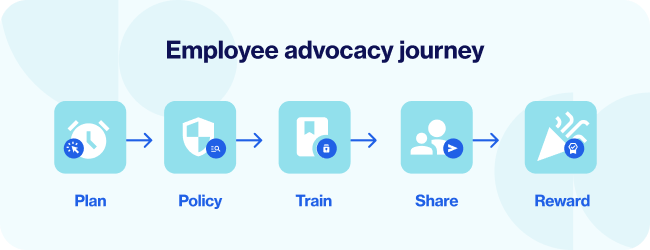
Now that we know why employee advocacy is so powerful, how do you actually get your employees involved? Building a successful program takes more than just asking people to post. In this section, we break down a practical step-by-step plan to encourage and sustain employee sharing on LinkedIn. From laying the groundwork with leadership to equipping employees with content and celebrating their efforts, here’s how to make employee advocacy work in your organization: “Employees are a company’s biggest advantage on social media.”
Secure leadership buy-in and set clear goals
Start at the top. Getting executives and managers on board will create the support needed to make advocacy part of your culture. Explain the business case by using some of the stats we mentioned to show how employee sharing boosts reach, trust, and leads.
Set clear goals for your employee advocacy initiative (e.g., increasing LinkedIn engagement by X%, driving web traffic, or improving share of voice in your industry).
When leadership actively supports the program (and even participates by sharing themselves), it signals that advocacy is a priority, not just a gimmick. 31% of high-growth companies have a formal employee advocacy program, more than double the rate of average firms.
Establish a social media policy and guidelines
Before unleashing your team on LinkedIn, set them up for success with a clear social media policy. Employees are more likely to share confidently if they know the “rules of the road.” Outline what’s appropriate (and not) to post, how to handle sensitive information, and tips for representing the company positively online. The goal is to remove fear and confusion. Employees should feel empowered, not restricted, by the guidelines. Keep the policy simple, positive, and focused on encouraging authentic engagement (versus a long list of don’ts). When people understand that the company wants them to be active on LinkedIn and has their back, they’ll be far more willing to jump in. Include do’s and don’ts, hashtag/use guidelines, and examples of good posts. With guardrails in place, your team can share with confidence and brand safety in mind.
Additional information on policy and guidelines is covered in depth in our Social media employee handbook
Provide training and encourage personal branding
Many employees might be hesitant to post simply because they’re unsure how or what to post. Solve this by offering training and resources. Host a lunch-and-learn on LinkedIn best practices, or bring in a social media expert for a workshop. Teach employees how to build a great LinkedIn profile (professional headshot, clear headline, etc.), how the LinkedIn algorithm works (for instance, that it favors content from personal accounts over company pages, and how to craft an engaging post. Share examples of successful employee posts. You might also identify internal ambassadors, such as team members who are already social-savvy, and have them share their experiences or mentor others.
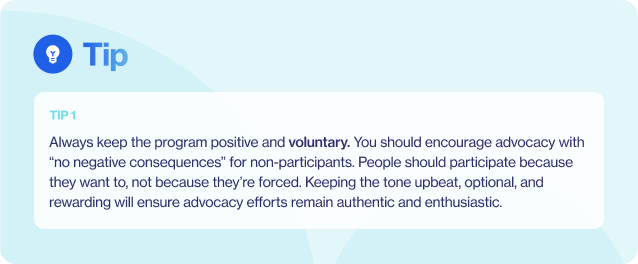
The key is to help employees understand the power of their personal network and how sharing benefits them, not just the company. When employees see that becoming active on LinkedIn can grow their own professional brand and influence, they’ll be more motivated to participate. Showcasing a few success stories (e.g., an employee whose post led to a sales lead or a speaking opportunity) can really inspire others. And remember: encourage, don’t force. Participation should be voluntary and enthusiasm-driven. (If someone isn’t comfortable with social media, that’s okay, start with the ones who are interested to lead by example)
Tips to make content sharing easy for employees
One of the biggest barriers to employee sharing is not knowing what to post. Remove that friction by providing a steady stream of shareable content and user-friendly tools. Curate relevant content for employees ot share. For example, create a weekly internal newsletter or Slack update with pre-approved articles, blog posts, product updates, event announcements, and suggested captions that employees can copy or adapt. This saves employees time and ensures the messaging is on-brand. However, always encourage employees to add their personal touch, such as a quick comment on why they find an article valuable or a note of congratulations on a company milestone that affects them, so that posts feel authentic.
Companies invest in employee advocacy platforms (like Oktopost) that make sharing as simple as clicking a button. These tools can integrate with LinkedIn, letting employees share content with one tap and even auto-schedule posts. A solution like Oktopost can significantly streamline participation and track results.
Even without dedicated software, leveraging tools like the LinkedIn “share” button on your blog can help. The easier and more turnkey you make the process, the more employees will participate. The motto here: deliver content on a silver platter. When an employee gets an email saying, “Here’s an interesting article to share this week, with a couple of sample comments you can use,” it dramatically lowers the effort required. Convenience is king!
Recognize, reward, and keep it fun
To sustain momentum, make employee advocacy rewarding. Human nature is such that a bit of recognition goes a long way. Give shout-outs to employees who are active on LinkedIn.
For example, highlight the “advocacy star of the month” in an internal email or at team meetings. Celebrate when an employee’s post performs well or when their activity leads to a win (like a new client or a media mention).
You can also introduce friendly competition or gamification: a leaderboard for shares/engagement, or small prizes for advocates (company swag, gift cards, extra PTO time, etc.). Another idea is to integrate advocacy into performance or bonus considerations if appropriate. Important to mention that even without monetary incentives or public recognition, knowing that leadership values these efforts can be very motivating. The point is to show employees that their contributions on LinkedIn matter and are appreciated.
Make it social – consider creating an internal group or channel where employees can share their LinkedIn posts and support each other (e.g., by liking/commenting on colleagues’ posts to boost that initial engagement). This builds a sense of community around the program.
How to track ROI from employee advocacy
Like any marketing initiative, you’ll want to track how your employee advocacy program is performing. Start by establishing a baseline (what’s your LinkedIn engagement, reach, website traffic from social, etc., before the program?) so you can see the change over time. Then measure key metrics regularly: for example, track increases in total post impressions, engagement (likes/comments/shares) on employee posts, referral traffic to your website from LinkedIn, the number of employee shares per week, and even leads or sales attributable to social media activity.
LinkedIn’s analytics for your company page can show trends in reach and engagement, and if you use an advocacy platform, it likely has dashboards to see who is sharing and what engagement they get. You can also use tracking links (UTM parameters in URLs) to attribute clicks and conversions to employee-shared content.
Don’t forget qualitative feedback, too. Ask your sales team whether they’re getting more inquiries referencing LinkedIn or recruiters, and whether more candidates mention seeing employees’ posts. Share the results with both leadership and participants to highlight the impact of their efforts.
For instance, “This quarter, our employees’ LinkedIn shares reached 50,000 people and drove 200 extra visits to our website.” Seeing the real numbers will reinforce the value of the program. Use the data to refine your approach: double down on the content that performs best and adjust areas that aren’t working. Maybe you find that thought leadership articles get more engagement than product announcements; that’s a cue to provide more of that content. Or, you might notice certain employees emerge as super-sharers; you can recruit them to mentor others. By measuring and iterating continuously, you’ll evolve a highly effective advocacy program.
Remember, the goal is not just activity for its own sake, but meaningful outcomes like brand awareness, trust, lead generation, and talent attraction. Keep those outcomes in focus and use the metrics to tell your program’s success story.
Final thoughts: Turning employee advocacy into business impact
Employee advocacy is the engine you need to supercharge your LinkedIn presence.
It’s a modern, organic solution to many of the challenges B2B marketers face on social media, from limited reach to lack of trust.
By transforming employees into enthusiastic storytellers, you amplify your content’s reach, inject authenticity into your brand voice, and build deeper trust with your audience. And it’s not just about marketing metrics: an employee advocacy program can create a stronger sense of community and pride within your team, and project an attractive image to potential recruits.
Buyers conduct thorough online research, and 75% of B2B buyers say social media influences their purchase decisions. Tapping into your employees’ networks is not just a nice-to-have, but a strategic must-have.
The great news is that employees want to be heard, and many are willing to share, given the proper support. By following the steps outlined above
- Securing buy-in,
- Providing guidance,
- Providing content, and
- Rewarding engagement
You can build a sustainable program that grows over time. Start small if you need to (even a pilot with one department or a handful of eager employees can demonstrate results), and then scale up. The impact will compound as more employees join in.
Remember, authenticity is key: when employees share genuine perspectives, it humanizes your brand in ways no polished corporate campaign can. As one article put it, “employees are a company’s most significant advantage on social media. Your competitors might be investing heavily in ads or branded content, but your edge can be your people. No one knows your business better than the employees who live it every day, and their voices can cut through the noise.
Ready to ignite your employee advocacy program?
Don’t let this opportunity pass by. Talk to an expert to brainstorm an employee advocacy strategy tailored to your organization’s needs, or book a demo to see how an employee advocacy platform can make scaling this effort a breeze. By taking action now, you’ll position your company to harness the full power of LinkedIn, not just through your company page, but through a chorus of authentic employee voices.
Talk to an Expert → Get personalized guidance on launching or improving an employee advocacy program.
Book a Demo → Explore how the right tools can simplify content sharing and amplify your reach on LinkedIn.
Empower your employees, and you’ll empower your brand. It’s time to turn those LinkedIn connections into real business impact – one employee share at a time.