



Introduction: How modern clients choose law firms
A prospective client contacts a partner at a law firm after months of quiet observation. They have been reading thought leadership from several partners, watching short insight clips from recent events, and noticing how associates break down new regulations in clear, practical language. By the time the first conversation happens, trust is already in place. The firm has consistently demonstrated its expertise publicly and over time [Edelman & LinkedIn].
This is how modern clients choose law firms.
Decision-making now begins long before a pitch, an RFP, or an introduction. Buyers research firms independently, follow lawyers on LinkedIn, and assess how legal expertise shows up in real-world commentary. Much of this evaluation occurs silently, without any signal to the firm itself [Thomson Reuters].
For large law firms that understand this shift, B2B social media is no longer a marketing channel. It is a trust channel. It is how reputation is built in the public eye, how expertise becomes discoverable, and how early confidence is formed at scale. Social media has become a core driver of influence, credibility, and modern business development.
1. Why visibility is the new currency in legal business development
Law firms face a structural growth challenge. Most firms are under pressure to grow revenue by winning new clients while simultaneously protecting and retaining their existing book of business. Increasing fees alone is not a sustainable strategy, yet relying on referrals and historical relationships makes growth unpredictable and increasingly competitive.
The problem is not a lack of expertise. Large law firms are filled with specialists, emerging leaders, and deep institutional knowledge. The problem is visibility.
Much of a firm’s expertise remains locked inside internal meetings, client work, and private conversations. Prospective clients cannot see how lawyers think, how associates interpret change, or how teams respond to emerging risks. As a result, firms struggle to differentiate in crowded markets where many competitors appear equally qualified on paper.
[LexisNexis InterAction & Hinge Research Institute].
This invisibility affects both new business and retention. For new clients, the absence of visible expertise makes it harder to build early trust. Buyers increasingly want to validate firms long before initiating contact, and when they cannot find consistent, relevant insight, they move on [Thomson Reuters]. For existing clients, limited public presence weakens the ongoing perception of value, even when the firm is delivering excellent work behind the scenes.
Employee advocacy directly addresses this challenge.
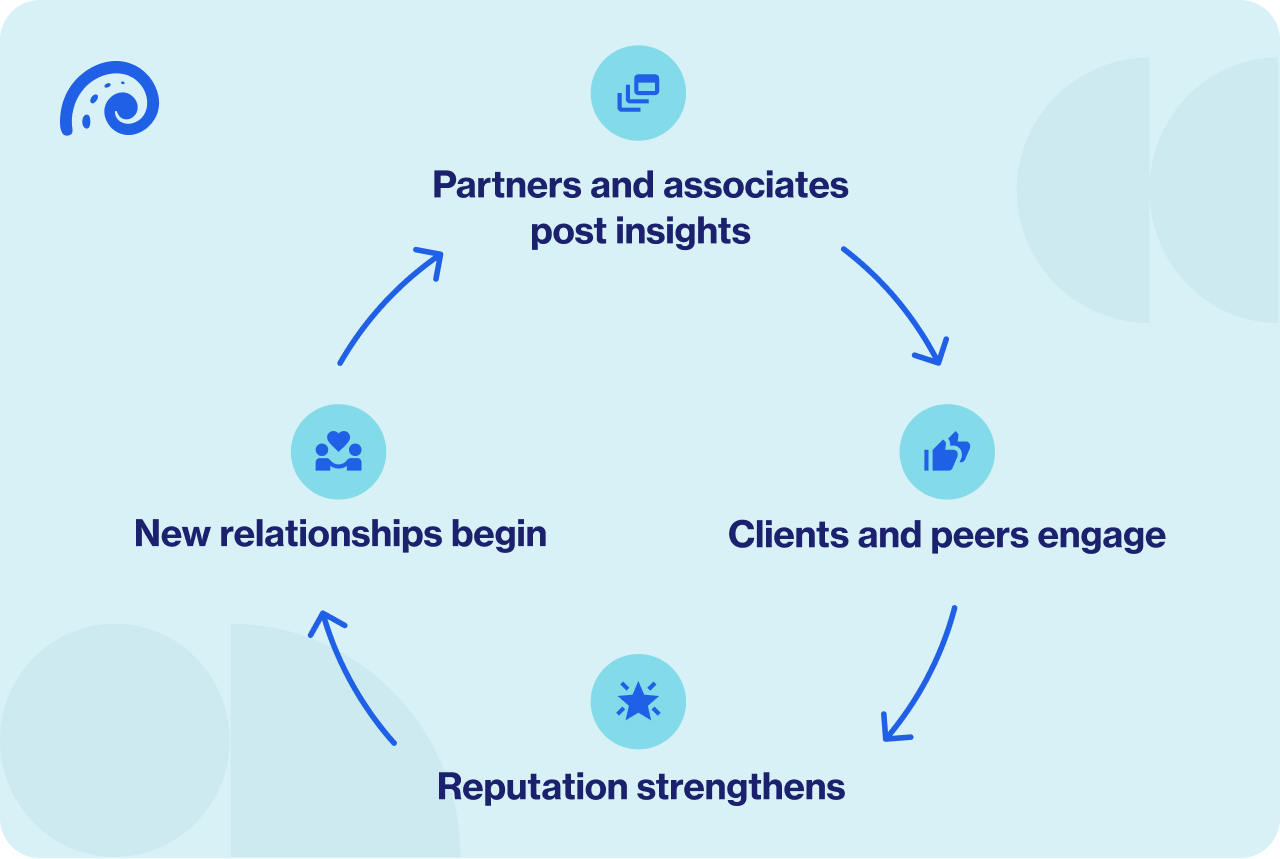
When associates, specialists, and partners consistently share insights in public, the firm’s expertise becomes discoverable. Associate-led commentary on regulatory changes, case trends, and industry developments signals depth and continuity. It shows clients that knowledge is not concentrated among a few senior partners but is embedded throughout the firm.
This visibility builds trust at scale. Prospective clients encounter the firm through multiple voices and across various topics over time. Existing clients are reminded of the firm’s relevance and thought leadership without being sold to. Trust is reinforced passively and continuously [Edelman & LinkedIn].
Employee advocacy does not replace relationships. It strengthens them. It ensures that when clients are ready to engage, the firm is already familiar, credible, and top of mind.
By making expertise visible through the people closest to the work, law firms unlock a more resilient growth model that attracts new clients, protects existing relationships, and positions the firm for long-term relevance.
2. How B2B social media builds trust for law firms
The legal industry has long relied on referrals, historical relationships, directories, and carefully built reputations. These remain important, but they are no longer enough. Digital behavior has reshaped how clients evaluate experts and select counsel [LexisNexis InterAction & Hinge Research Institute].
Clients research firms digitally. They scan posts with thought leadership content on LinkedIn, watch commentary on emerging risks, and learn about the depth of talent through associate posts and partner insights [Hinge Marketing]. They expect to see signals of real expertise before committing to a conversation.
Reputation is increasingly built in public. The strongest firms reinforce their credibility by consistently demonstrating clarity, insight, and leadership [Good2bSocial]. When expertise becomes visible, the firm becomes top of mind. Silence, on the other hand, communicates disconnection or complacency.
This shift explains how relationships now begin long before outreach. With social media, partners and associates can nurture early trust without a single email. A thoughtful comment, a shared perspective, or a clear explanation of an emerging legal trend can create the first touchpoint in a future client relationship [Edelman & LinkedIn].
Expertise must be demonstrated, not just claimed. Statements no longer convince clients of excellence. They need to see how lawyers think, interpret issues, and engage with the market. Social media is the most efficient and scalable way for firms to show how their expertise applies to real situations [Major, Lindsey & Africa].
B2B social media influences reputation, shapes business development outcomes, and helps clients understand the full strength of your talent.
For large law firms, B2B social media has become a strategic advantage.
3. Step-by-step social strategy framework for legal teams
To see actual business impact from social media, firms need a structured strategy rather than sporadic posting. The foundation begins with precise brand positioning, a well-defined audience, and consistent messaging across all levels of the firm [Thomson Reuters].
Brand positioning defines how your firm wants to be perceived in the market. Every practice area, every partner, and every spokesperson should understand the core value the firm brings to clients. Social content is the daily reinforcement of that positioning.
Practice area visibility is essential because social media algorithms favor niche authority. When partners and associates post consistently in their areas of expertise, the firm gains multidirectional visibility, strengthening its overall brand [Hinge Marketing]. Each practice builds its own authority while contributing to the broader firm narrative.
Target audience segmentation ensures your content reaches the right people. Your audiences may include general counsel, compliance leaders, CEOs, founders, CFOs, regulators, referral partners, and other firms. Each group cares about different messages and responds to different content formats.
A messaging framework helps lawyers and marketing teams stay aligned. It defines the themes, topics, tone, and priorities your content should reflect. It also ensures that each practice area reinforces consistent strategic messages while still showcasing individual expertise.
Consistency expectations should be clear across the firm. Partners, associates, and marketing teams need guidance on cadence, voice, and coordination. Social media rewards consistency, and law firms that build regular posting habits become far more visible than firms that show up once a quarter with a corporate announcement [American Bar Association].
A foundational strategy sets the stage for long-term credibility and scalable influence. It turns social media into a reliable, measurable, and impactful part of the firm’s go-to-market strategy.
4. Social media content pillars every law firm needs
A strong social presence does not require constant creativity. It requires clarity. By establishing content pillars, your firm creates a reliable structure for thought leadership that aligns with your brand and resonates with clients [LexisNexis InterAction Blog].
Regulatory changes are among the most shareable and valuable topics because clients want to understand how new developments affect them. Short explanations, practical implications, and insights into compliance considerations perform well across professional audiences.
Case trends help clients anticipate emerging risks. Associates and partners who translate complex developments into simple observations demonstrate both expertise and commercial understanding.
Industry commentary allows lawyers to address broader market movements. Whether it is cybersecurity, employment shifts, supply chain issues, or global regulation, these topics attract strong engagement and reinforce thought leadership [HubSpot].
FAQs allow your experts to answer common client questions in an accessible language. When lawyers demystify complex legal concepts, clients gain confidence in that lawyer’s clarity and practicality.
Leadership content shows the values and perspectives of senior attorneys. Executive presence on social channels strengthens the firm’s credibility and shows clients who the people behind the brand are.
People and culture content humanize the firm. Clients want to know who they will work with, how the firm operates, and what its culture represents. Community engagement showcases participation in events, panels, conferences, and pro bono initiatives. This type of content strengthens the employer brand and promotes a sense of involvement and leadership.
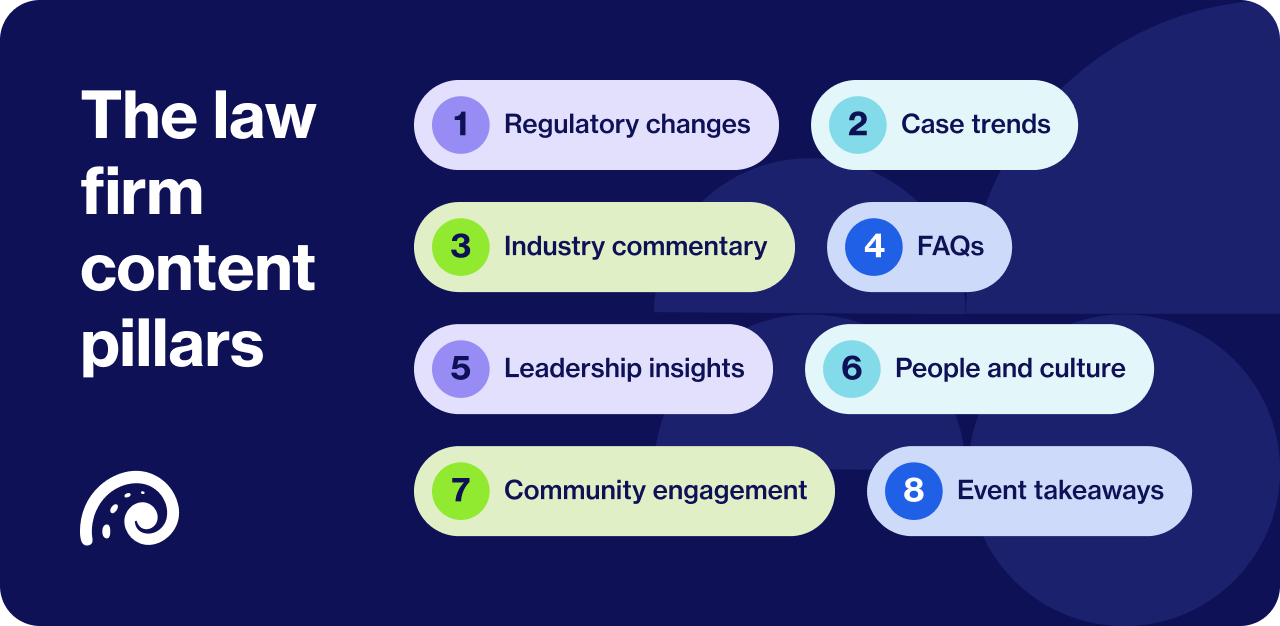
When these pillars work together, they create a diverse and compelling content ecosystem that demonstrates depth, expertise, and humanity.
5. Empowering partners and senior lawyers on LinkedIn
Partners and senior lawyers carry the weight of the brand. Their visibility influences how clients perceive the firm as a whole. When partners show up consistently on social media, they reinforce authority and demonstrate leadership.
They embody the firm’s reputation because clients often choose counsel based on trust in individual partners. The more accessible and visible these leaders become, the easier it is for clients to feel confident in their expertise [Legal Marketing – LinkedIn].
Their expertise drives trust. When senior attorneys break down complex topics, share interpretations of new regulations, or provide leadership commentary, clients see how they approach problem-solving. This builds early trust that accelerates business development.
Building a strong executive presence requires intention. Partners should understand their audience, refine their voice, and commit to regular posting. They do not need to become influencers. They simply need to demonstrate consistent, accessible thought leadership that shows who they are as attorneys and advisors.
Partners who embrace this role become catalysts for firm-wide visibility and influence.
6. Activating associates and specialists
Associates and specialists may not have the same authority as partners, but they play a pivotal role in modern legal reputation. They are often closer to day-to-day developments in cases and emerging issues, making them uniquely positioned to share insights (Hinge Marketing, 2025).
Social coaching helps associates understand what to post, how to frame insights, and how to maintain a professional tone. Coaching sessions build confidence and reduce hesitation about posting publicly [Good2bSocial].
Advocacy enablement provides associates with structured opportunities to participate. Content libraries, ready-to-share posts, and weekly prompts simplify contributions and help associates consistently join the conversation [LexisNexis InterAction Blog].
Content support provides associates with templates that clearly structure insights. These templates help them focus on what matters without overthinking format or wording [American Bar Association].
AI-assisted workflows allow associates to transform notes, thoughts, or case trends into polished posts. AI tools reduce time barriers and help associates find their voice more easily [HubSpot].
Motivational programs can sustain participation. Gamification, recognition programs, and spotlighting high-performing posts encourage associates to see advocacy as part of their professional growth [Edelman & LinkedIn]
Activating associates expands your firm’s presence, enhances your employer brand, and strengthens practice-area visibility. It also builds the next generation of credible, visible leaders.
7. Creating a culture of social advocacy in large law firms
To see meaningful results, advocacy must become a collective effort supported by structure and recognition. A firm-wide advocacy culture encourages participation across all levels of the organization.
Internal education is the foundation. Training sessions help lawyers understand the purpose, value, and expectations of social participation. When people understand how advocacy supports reputation and growth, they become more willing to engage.
Practice-specific campaigns create momentum around key topics. Employment, tax, litigation, intellectual property, and corporate teams can run targeted initiatives that showcase insights relevant to their industries. Advocacy gamification introduces friendly competition. Leaderboards, challenges, and rewards help create excitement and sustained engagement, especially among associates.
Incentives and recognition reinforce positive behavior. Highlighting top contributors, sharing success stories, and celebrating social milestones help make advocacy a valued part of firm culture.
Measuring success is essential for continued momentum. When teams see how their contributions increase reach, engagement, and client interest, they understand their impact on the firm’s reputation.
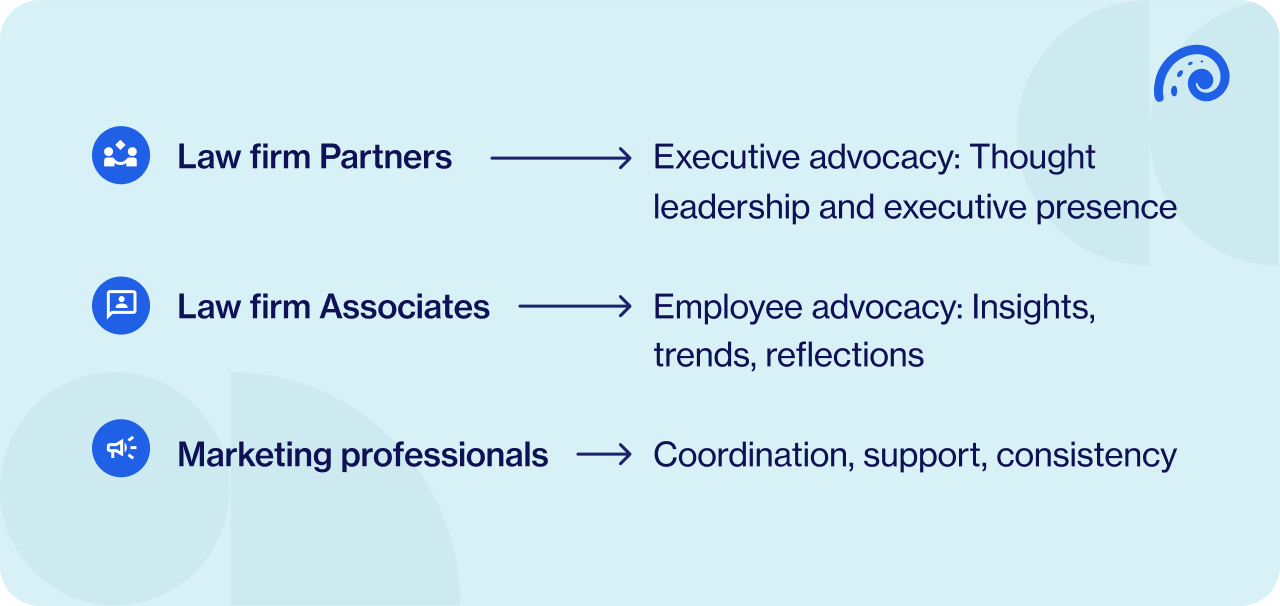
A strong advocacy culture turns your entire firm into a network of influencers and trusted experts.
8. Navigating risk: social media compliance for legal professionals
Large law firms must balance visibility with protection. Compliance and oversight ensure that all social activity aligns with the firm’s standards and reduces legal risk [American Bar Association].
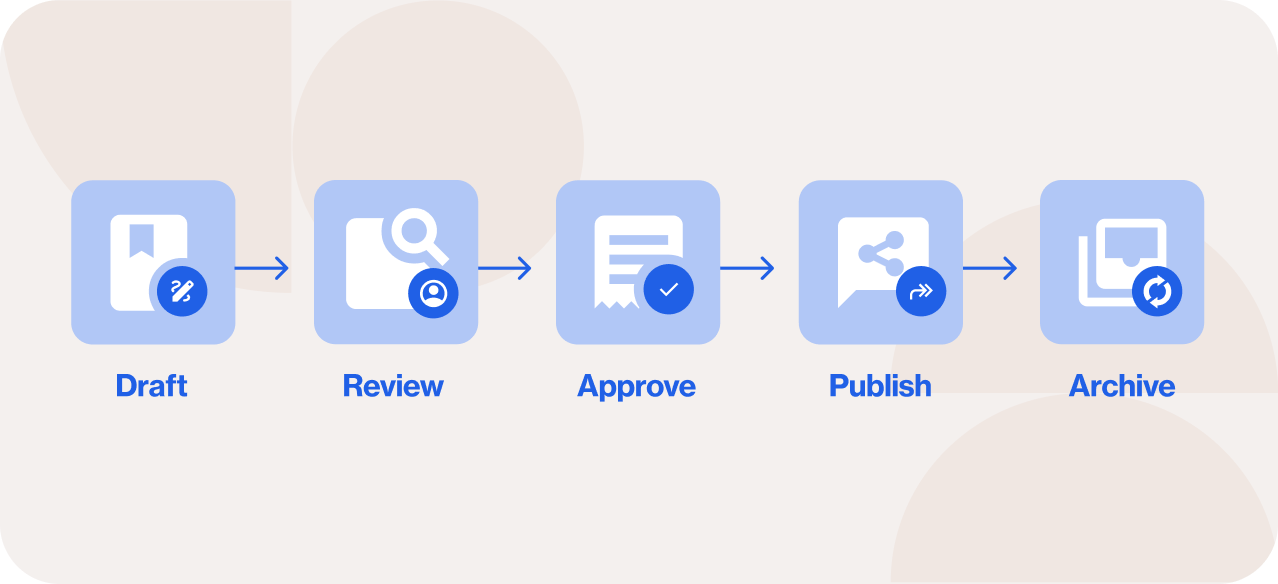
Review workflows define how content moves from draft to approval. Partners, associates, and marketing teams need clarity on who reviews what and under which circumstances.
Approval controls help regulate sensitive posts, high-impact content, or messages related to specific clients or regulatory matters. Structured approvals promote confidence and safety without unnecessarily slowing participation.
Tone alignment ensures that all communication reflects the firm’s voice. While each lawyer has a personal style, a shared tone reinforces brand cohesion and professionalism.
Sensitive topic guidelines help lawyers avoid areas that require caution. Marketing teams can prepare guidance on topics such as litigation, client confidentiality, political issues, or regulatory matters that may require nuanced framing.
Compliance need not limit creativity. It creates a safe environment that allows lawyers to participate with confidence.
9. The best social media tools and workflows for law firms
Firms need technology and workflows that support a structured, efficient, and compliant approach to social media. Without strong infrastructure, participation becomes fragmented and challenging to manage.
Centralized publishing ensures that all firm posts are created, scheduled, approved, and reviewed in one place. This creates clarity across offices and teams.
Role-based permissions allow firms to assign posting, drafting, reviewing, and approving rights to the appropriate people. This prevents mistakes and maintains governance.
Multi-office coordination helps global or regional firms ensure consistent messaging across markets. With unified workflows, time zones, and geographic distance, do not disrupt communication.
Insights for BD and PR help teams understand which content resonates with clients, prospects, journalists, and regulators. These insights support strategic decisions, targeted outreach, and proactive reputation management [Thomson Reuters].
The right tools make social participation easier, safer, and more impactful.
10. Why law firms choose Oktopost for B2B social success
Oktopost provides a unified platform for law firms to manage their social presence, activate their people, and measure the impact of their expertise.
Publishing allows marketing teams to create, schedule, and distribute content across channels, practice areas, and offices with governance control.
Advocacy enables partners, associates, and specialists to share ready-to-use content aligned with their practice-area expertise. It makes participation simple and keeps messaging consistent.
Analytics provide deep insights into what works, who is driving visibility, and which topics create the strongest engagement. Firms can track influence by partner, practice area, region, or industry.
Social listening helps firms monitor conversations, trends, competitor messaging, and brand sentiment. It becomes a valuable tool for PR teams, business development, and senior leadership.
Marketing intelligence helps firms understand how competitor firms communicate, how their messaging evolves, and how they can differentiate through content strategy. Compliance frameworks ensure that all social activity remains safe and on brand. Approval flows, governance settings, and review logs create confidence for lawyers at every level.
Oktopost brings everything together on one platform to help law firms build reputation, visibility, and measurable influence.
11. 60-day roadmap to social media launch and activation
Launching a strong B2B social program is possible within 60 to 90 days. With the right planning, activation, and measurement strategy, firms can move quickly from intention to meaningful visibility.
The process begins with planning and alignment. Define your brand positioning, identify content pillars, and create foundational messaging for each practice area. Establish guidelines and governance so that everyone understands expectations.
Activation focuses on training partners, enabling associates, onboarding teams into advocacy workflows, and distributing early content. This phase builds momentum and encourages participation.
Measurement helps refine strategy. Monitor which content performs best, which practice areas gain the most traction, and which lawyers build influence fastest. Use these insights to improve content and support lawyers more effectively.
In 60 to 90 days, firms can shift from sporadic posting to a structured, strategic, and powerful social presence that supports both reputation and business development.
Conclusion
Law firms win by elevating the visibility of their people. Clients want access to experts who communicate clearly, consistently share insights, and demonstrate leadership in their field. Social media is the most scalable way to make expertise discoverable, credible, and trusted
When partners, associates, and specialists participate together, the firm becomes a visible network of authorities. This is how modern legal brands are built. With a thoughtful strategy, strong governance, and powerful tools like Oktopost, law firms can transform social media into a competitive advantage that shapes reputation and drives growth.