


- Welcome emails set the tone for two-way communication and are rated effective by 75% of top marketers, yet only 53% send them.
- Nurturing emails should educate, not pitch, since 73% of B2B leads aren't yet sales-ready.
- Nurturing emails can also win back disengaged customers with targeted, helpful outreach.
- Delight emails (discounts, personal gestures) turn satisfied customers into brand evangelists and referral sources.
Isn’t it disheartening to put in a great deal of work into your B2B email marketing only to see little engagement and no conversions?
In order to meet the industry benchmark of 25% or higher open rate, your emails must deliver value to subscribers and prompt them to take the next action. Adopting a palatable inbound email strategy can go a long way toward building engaging emails that drive more conversions as we shift away from sales, pushy, and disruptive outbound marketing.
Once you’ve created search-engine-optimized content for ATTRACT website visitors, you’ve successfully laid the foundation for sending inbound emails. An inbound email marketing strategy can then be incorporated into the three successive stages of marketing, namely CONVERT, CLOSE, and DELIGHT.
1. Convert visitors into leads
The first inbound email comes into play at the final phase of ‘conversion’. In other words, it’s the “Thank You” or “Welcome” email that leads receive as soon as they sign up or make the first interaction with your brand, whether it is the first purchase, first resource download or webinar registration. Nevertheless, only 53% of marketers currently use welcome emails.
How do welcome emails help?
- First and foremost, welcome emails set the tone for future communication, namely two-way communication.
- They create a lasting impression and make the subscriber feel valued.
- Welcome emails are found to be one of the most effective email campaigns by 75% of top marketers.
- They increase engagement by building a strong brand image.
- The CTA’s strategic placement at the top of the email entices subscribers to take the next action and aids in conversions.
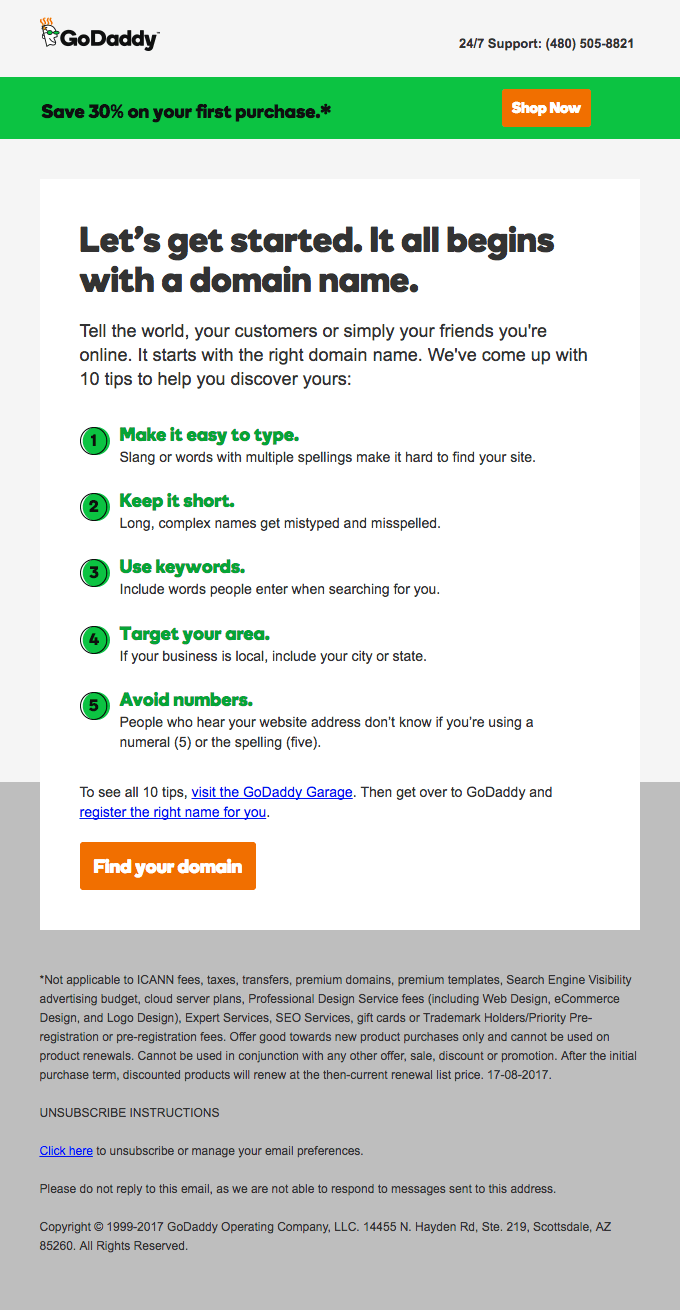
One such company that employs a successful inbound email strategy is GoDaddy. Once a subscriber signs up to GoDaddy, they receive an onboarding email that gives them tips on how to create the best domain name. Offering subscribers relevant information is a brilliant way for a company to deliver value.
2. Turn leads into customers
The next series of emails allows you to nurture leads until they are “sales-ready”. The prime objective is not to pitch your product or service, rather to have a conversation with prospects, educating them with relevant content through every stage of the buyer journey. You can include blog posts, white papers, or any other resource that teach them about things they want to know based on their online behavior: What did they last download? Which topic was it about? Which pages on your website do they frequently visit?
How do nurturing emails help?
- 73% B2B leads are not sales-ready. Hence, these emails help prospects who are looking for information rather than to make a purchase.
- Since nurturing emails are personalized to buyers’ preferences and previous interactions, they are more likely to move down the funnel.
- Nurturing emails make it possible to upsell or cross-sell your products and services to existing customer. Take a look at how Grammarly promotes its premium services.

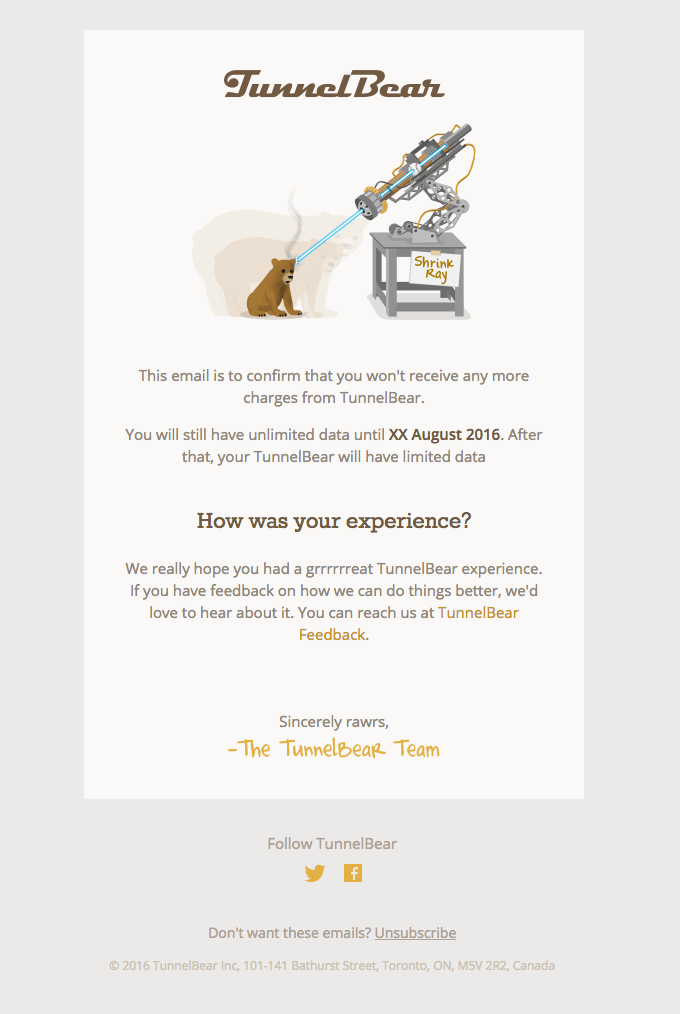
- They help you win back disengaged customers. For example, you can send out emails that intend to improve customer service and provide help to customers that are facing technical difficulties. TunnelBear sends out meaningful win-back emails that request customer feedback and enable users to reach out for help.


3. Delight customers
The final stage of an inbound marketing strategy is ‘delight’. Aside from social media posts, you can delight customers by sending an email, expressing gratitude for their loyalty. You can get more creative by offering a discount, contest, or even a free trial of a new feature. Check out the email that Charity: Water sends out – a subtle greeting which delights the subscriber and makes them feel special on Valentine’s Day. Sweet, isn’t it?

How do delight emails help?
- By consistently providing offers that customers love, you help to turn them into brand evangelists.
- Delight emails enhance the word-of-mouth publicity for your company, thereby creating a platform for referral marketing.
- These emails are persuasive tools to encourage customers to make more frequent upgrades or purchases.
Wrapping up
Whether you wish to generate leads, acquire new customers, or retain existing ones, an inbound email marketing strategy helps you achieve all your B2B goals. By keeping your emails conversational, helpful, and valuable, you will surely see more conversions, ROI, and business growth in the days to come.