How to build an irresistible employer brand with social advocacy




Table of contents
- Why employer branding matters more than ever
- 5 steps to build a powerful employer brand from scratch
- Employee advocacy: Turning your team into talent magnets
- Why employee advocacy works: 3 key benefits of employee advocacy for employer branding:
- How referral programs drive better, faster hires
- Using social media to amplify your employer brand
- LinkedIn, Instagram, TikTok & more: Platform-by-Platform tips
- How HR and Marketing can build a unified employer brand
- Metrics that matter: Measuring employer brand success
- Bringing it all together: Advocacy, referrals, and social reach
- Final thoughts
A strong employer brand is your reputation as a great place to work, and directly impacts your ability to attract and retain talent. Recent research underscores this urgency:
77% of HR professionals report difficulty filling roles due to talent shortages. Companies with compelling employer brands have a clear edge: they attract more qualified candidates and experience higher employee engagement and retention.
In fact, organizations with a strong employer brand can achieve up to a 50% lower cost-per-hire and 28% lower turnover than those with weaker brands. On the flip side, a poor employer reputation is costly; employers with weak brands often spend almost 2× more per hire, and 81% of job seekers say they would refuse to join a company with a bad reputation (even if unemployed).
In short, employer branding isn’t just a marketing tagline or an HR fad; it’s a strategic imperative for any company that wants to compete for the best talent.
Building an irresistible employer brand is not just HR’s job. It requires a close partnership between HR and Marketing to align the company’s internal culture with its outward messaging.
For CMOs and CHROs alike, developing an authentic and transparent employer brand is key to attracting and retaining the right people.
This guide outlines how Marketing and HR can collaborate on a unified strategy and leverage two “secret ingredients” of employer branding success: employee advocacy and referral programs. It will also cover how to use social media (both corporate channels and employees’ personal networks) to amplify your employer brand message, with specific tips for LinkedIn, Instagram, TikTok, and Facebook. By the end, you’ll have a roadmap to turn your employees into enthusiastic brand ambassadors and your social channels into magnets for top talent.
Why employer branding matters more than ever
Establishing a strong employer brand yields tangible benefits for recruitment and retention. A positive employer brand signals to job seekers that your company is a great place to work, which makes them more likely to apply and accept offers. It also boosts morale and loyalty among existing employees, contributing to better overall performance. Crucially, employer branding affects the bottom line: companies with robust employer brands enjoy significantly lower hiring costs and faster talent acquisition. Studies show that a strong employer brand can cut cost-per-hire by half and reduce employee turnover by over 25%. In practical terms, investing in your employer’s reputation means you can hire more efficiently and keep your best people longer.
By contrast, neglecting employer branding can hurt your organization. A weak or negative employer brand not only drives up recruiting costs, but it also shrinks your talent pool. Most candidates today research employer reviews and ratings before even applying for a job. If they encounter a bad reputation, many won’t bother to apply – even 81% of unemployed workers will avoid a company with a poor employer brand.
Those who do join might be quick to leave if expectations don’t match reality, adding to turnover costs. The message is clear: employer branding makes a difference. It shapes whether people want to join your company and stay for the long run, directly impacting talent acquisition success and retention rates.
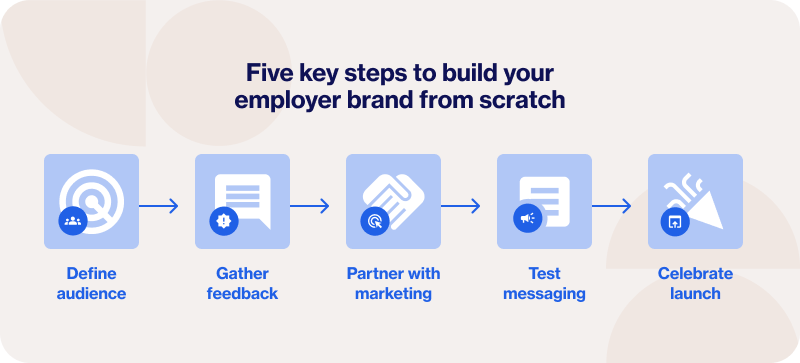
5 steps to build a powerful employer brand from scratch
If you’re looking to establish or revamp your employer brand, it helps to follow a structured process. Below are five fundamental steps for creating a compelling employer brand strategy from the ground up:
- Define your ideal candidate persona.
Just as marketers conduct in-depth research on their target audience, HR (in partnership with marketing) should clearly define the profile of your ideal employees and candidates. The first step is to identify your current top performers and the characteristics your ideal future hires should have. Focus on the traits, skills, motivations, and values that your best people exemplify; those are the people you want more of. Gather data on what your target candidates care about in an employer. This information will help you craft an employer brand message that genuinely resonates with the talent you’re trying to attract. - Gather employee feedback about your workplace.
Don’t rely solely on leadership’s perspective when shaping your employer brand. Instead, actively seek input from employees at various levels about what it’s really like to work at your organization. Use surveys, interviews, and focus groups to learn how employees feel about the culture, values, and employee experience. Ask what makes your company unique and what keeps them engaged (or what they wish would improve). This feedback will highlight the strengths you can showcase and reveal areas to address. By understanding what matters most to your people, you ensure your employer brand rings true and addresses authentic themes, rather than just aspirational marketing. - Partner with marketing to craft a brand identity.
Once you’ve collected employee insights and defined your candidate persona, it’s time to transform that knowledge into a clear employer brand identity. In this step, HR and Marketing collaborate closely on the employer brand “ideation” process. Bring HR’s knowledge of workplace benefits, culture, and employee sentiment to the table, and let Marketing shape these into compelling messaging and visuals. The goal is to highlight the most appealing aspects of working at your company. Ensure that the true benefits of working for your organization (e.g., growth opportunities, team culture, mission impact) are the primary focus of your brand materials and recruiting content. Marketing can help translate those HR insights into an attractive narrative and design. Don’t be afraid to ask the marketing team to propose a few creative concepts or taglines for the employer brand. Iterate together until you have a defined employer value proposition, key messages, and look-and-feel that authentically reflect your culture. - Test and refine your employer brand messaging.
Before you launch your new employer brand widely, do a trial run to see how it resonates. Similar to a soft launch or A/B testing a campaign, you can pilot your employer brand messaging with a smaller audience and gather feedback. For example, hold additional focus groups or “listening sessions” with a mix of employees (and even friendly outsiders or recent hires) to gauge their reactions to the proposed brand materials. Does the brand message feel authentic to insiders? Is it attractive and clear to potential candidates? Your marketing team can assist in running these tests – even deploying a limited social media post or landing page to measure engagement. Collect data and input from these trials to inform your final decisions. The goal is to confirm which employer brand narrative truly resonates with people and fine-tune any elements that don’t. After all this effort, you want to choose a direction that will deliver the desired results confidently. - Launch and celebrate your employer brand.
Once you’ve finalized your employer brand strategy and materials, it’s time to launch – both internally and externally officially. Start by unveiling the employer brand to your internal stakeholders (leadership and employees) and get everyone excited about it. This could involve an internal campaign or event that shares the new employer brand story, videos, or career site with your team. Make it something positive and celebratory; you want employees to feel proud and energized, seeing their input reflected in the brand. Their genuine excitement will inspire them to share the news externally and reinforce why they chose to join your organization. Following the internal launch, roll out the employer brand publicly – update your recruitment website, social media profiles, and job collateral to reflect the new messaging and visuals consistently. Announce it on social channels and encourage employees to spread the word. By celebrating this launch, you not only generate buzz in the talent market but also remind current staff of the purpose and culture that set your company apart.
With a solid employer brand foundation now in place, you can turn to tactics that amplify your message to a wider audience. The next sections discuss two of the most powerful tools for elevating your employer brand: employee advocacy and referral programs. These programs harness the power of your people’s voices and networks to extend your reach far beyond what traditional corporate advertising can achieve.
Employee advocacy: Turning your team into talent magnets
Even the best employer brand message needs effective channels to reach candidates. This is where employee advocacy and employee referral programs come in – they are the “secret ingredients” that help your employer brand truly take off. Both strategies rely on your own employees to authentically spread the word, making your employer brand more relatable and credible to outsiders. Below, we explore how each approach works and how to excel at them.
Employee advocacy: empower your people to be brand ambassadors
What is employee advocacy? It’s when employees actively promote their company by sharing content on their personal social media accounts. Rather than relying on official corporate channels alone, employee advocacy mobilizes your workforce to share the company’s culture, values, and accomplishments with their friends and professional networks. For example, an employee might share a LinkedIn post about a day-in-the-life at your office, tweet about a team volunteer event, or post an Instagram story celebrating a project success.
Employee advocacy is extraordinarily effective for employer branding because it brings authenticity. Job seekers and the public trust content coming from real employees far more than polished corporate communications. When your people share positive work experiences, it humanizes your brand and makes it more believable. Advocacy also dramatically expands your reach by tapping into each employee’s network; every employee’s share or post introduces your workplace to new audiences that your corporate social media might not reach. In fact, studies show employee-shared content often outperforms official company posts – LinkedIn found that employees’ posts can generate roughly 2× higher click-through rates than posts from the company page, and companies with socially engaged employees are 58% more likely to attract top talent (and 20% more likely to retain them). Moreover, employees who are actively advocating tend to be more engaged themselves and even more likely to refer friends to join (creating a virtuous cycle for recruiting).
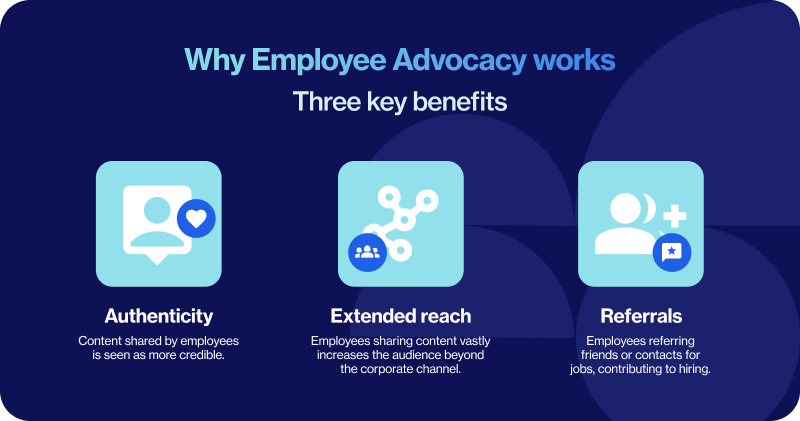
Why employee advocacy works: 3 key benefits of employee advocacy for employer branding:
- Authenticity and trust: Content shared by employees comes across as genuine peer insight. Prospective hires are more likely to trust and relate to posts from employees than corporate PR, which makes your brand feel more approachable.
- Extended social reach: Each employee has their own followers and connections. When many employees share employer brand content, it exponentially increases your visibility to potential candidates across social platforms. Your message can reach far beyond the company’s official follower list.
- Boosted referrals: Employees who are proud enough to advocate for the company are also more inclined to refer people in their network to open positions. Their advocacy naturally complements referral efforts by authentically broadcasting job opportunities.
To harness these benefits, companies establish structured employee advocacy programs. A successful program doesn’t happen automatically – it requires enabling and motivating employees to participate. Below are four key elements for an effective employee advocacy program, adapted from best practices:
- Incentivization: Employees need to feel motivated to share and engage. Use gamification, recognition, and rewards (like contests, shout-outs, small bonuses, or exclusive perks) to encourage participation. Friendly competition (leaderboards for most shares or impressions) and tangible incentives can spark enthusiasm and sustained advocacy.
- Training & Guidelines: Equip your team with clear social media guidelines and best practices. Not everyone will instinctively know how to advocate professionally on LinkedIn or Facebook. Provide training sessions or resources on using personal accounts for professional topics in an authentic but appropriate way. Give employees the do’s and don’ts (tone, hashtags, confidentiality) without being overly restrictive – you want their personal voice to shine through.
- Content curation: Make advocacy easier by providing a steady stream of ready-to-share content. While employees should add their own perspectives, you can help by preparing a variety of pre-approved content, such as company news, behind-the-scenes photos, success stories, employee spotlights, job openings, and thought leadership pieces. Having a content hub or a weekly email of shareable posts can significantly boost participation. Ensure there’s a good mix and that content never feels “forced” – employees should be able to edit or choose what resonates with them.
- Measurement & feedback: Track your advocacy program’s performance to demonstrate impact and refine it over time. Key metrics include the number of active employees, engagement (likes, comments, shares) on their posts, the total reach of employee posts, traffic or referrals to your careers site, and, ultimately, hires or referrals attributed to advocacy. Monitoring these KPIs will highlight what content works best and which employees might be great role models. Share results back with participants (e.g., “this campaign got 10,000 impressions thanks to your shares!”) and tweak the program based on what the data shows.
By equipping employees with the right tools, guidance, and incentives, your advocacy program can turn your workforce into a powerful extension of your brand. Employees’ authentic voices will amplify your employer brand message in ways no corporate advertisement can match.
How referral programs drive better, faster hires
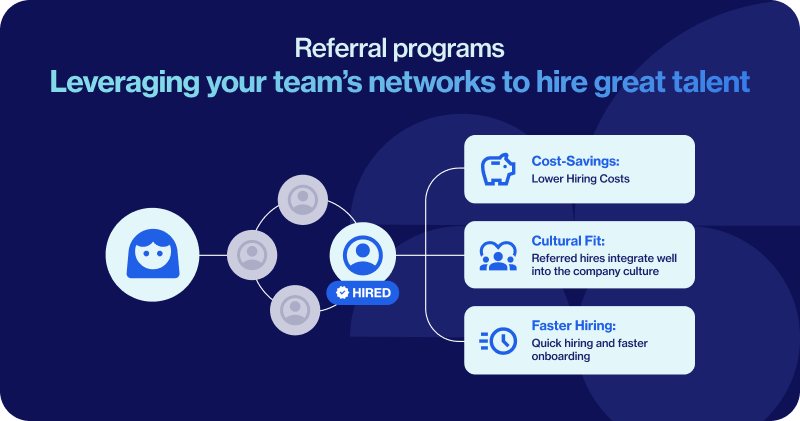
Another “secret ingredient” of employer branding (and effective recruiting) is a referral-based hiring program. Employee referral programs encourage your staff to recommend qualified candidates from their networks for open positions, often with rewards or recognition when those referrals become successful hires. This taps into the idea that great people know great people. When done right, referral hiring is a win-win: employees help find colleagues they’ll enjoy working with, candidates receive peer endorsements, and the company gains talent who are likely strong cultural fits.
Referral programs bring several clear benefits to an employer’s recruitment efforts:
- Cost-effective recruitment: Traditional hiring channels such as job boards and agencies can be expensive. Referral programs significantly reduce recruiting costs by leveraging employees’ personal networks rather than external advertising. You essentially crowdsource candidate sourcing to your team. Many companies find that referral hires save money on sourcing and often have lower salary negotiation costs, too.
- Higher retention and fit: Employees hired through referrals tend to stay with the company longer. Why? They come in with a better understanding of the company culture (often having heard about it from their friend who referred them), and they’re vetted by someone who knows the company. Referred candidates are often a better cultural fit and more informed about the role before they even start, leading to higher retention rates.
- Faster time-to-hire: Referrals can speed up the hiring process. Because referred candidates arrive pre-vetted and with a connection to the company, they often move through interviews faster and accept offers more readily than cold applicants. This faster time-to-hire means critical roles stay vacant for shorter periods.
To maximize referrals, integrate the program into your culture and communications. Encourage employees to promote job openings on their social networks (where referral programs dovetail with employee advocacy) and share their positive work experiences. For example, an employee might post on LinkedIn, “My team at [Company] is hiring a Software Engineer – I love working here because of [X, Y, Z]. Let me know if you’re interested!” This kind of genuine post can attract like-minded candidates and simultaneously boost your employer brand.
Also, make it worthwhile for employees to refer. Offer referral bonuses or other rewards when a referral candidate is hired – whether it’s a cash bonus, a gift, an extra vacation day, or public recognition – these incentives motivate employees to participate actively. Keep everyone informed by regularly updating staff on current job openings and the types of talent needed. Provide easy-to-share job descriptions or social media snippets to your team, so they can quickly forward opportunities to their contacts. The easier and more rewarding you make the referral process, the more your employees will become an extension of your recruiting team.
Finally, ensure your referral process is employee-friendly: acknowledge every referral, streamline the candidate experience for referred folks, and celebrate successful hires that came through referrals. A well-run referral program complements your employee advocacy — engaged employees who love their workplace will naturally share job openings, and those referrals in turn reinforce how strong your culture is. By combining authentic advocacy with proactive referrals, you create a powerful cycle: your employees broadcast a positive image that attracts talent, and they personally bring in great candidates who further enhance your culture.
Using social media to amplify your employer brand
Social media is one of the most effective channels for amplifying your employer brand worldwide. Prospective candidates frequently turn to social networks – LinkedIn, Facebook, Instagram, TikTok, and others – to get a feel for a company’s culture and values beyond the corporate careers page. In fact, 62% of job seekers check a company’s social media presence to assess its employer brand before applying. It’s crucial to intentionally curate your social media content with employer branding in mind, across both your official corporate accounts and your employees’ personal accounts.
Coordinate corporate and employee content: Both company social channels and employee advocates play roles, and they work best in tandem. Your corporate channels (e.g., the company’s LinkedIn page) should showcase high-level themes: key company achievements, announcements, values, community initiatives, and professional development opportunities. This establishes a consistent, formal employer brand message. Meanwhile, your employees’ personal posts bring a more personal, authentic perspective to those same themes. For example, your company might post “We’re proud to be named a Top Workplace for work-life balance,” while an employee might tweet about leaving early for their kid’s recital thanks to the supportive policy. Together, the two perspectives create a richer picture of your workplace. Ensure that your marketing/HR team provides guidance and content ideas so that messaging is aligned (not conflicting) while still allowing employees to share in their own voices.
What should you post on social media to strengthen your employer brand? Here are a few high-impact content ideas for corporate social channels, which employees can echo and personalize on their profiles:
- Showcase company culture: Share photos and videos of life at work – office events, team-building outings, volunteer days, and everyday behind-the-scenes moments that highlight your workplace vibe. This gives candidates an inside look at the environment and camaraderie, painting your company as an exciting and rewarding place to be.
- Leadership thought leadership: Have your leadership team (and company pages) regularly post content reinforcing the company’s values, vision, and expertise in your industry. When executives share insights or company news, it demonstrates that your company is an industry leader and a workplace where employees can learn and grow. Leaders’ voices can greatly influence how outsiders perceive the company culture and stability.
- Employee recognition and stories: Spotlight your people on social media. Celebrate employee milestones like promotions, work anniversaries, or notable accomplishments publicly. Not only does this boost internal morale, but it also signals to potential applicants that your company values and invests in its employees’ success. Similarly, share “day in the life” stories or short interviews with employees – this personal storytelling resonates with candidates.
- Purpose-driven job postings: When sharing job openings on social media, don’t just post a dry list of requirements. Frame the opportunity in terms of the unique benefits of working at your company. For instance, emphasize growth opportunities, team culture, exciting projects, and the impact a new hire can have on the mission, rather than just duties. This turns job ads into employer brand messages that sell your workplace, not just the role.
By consistently sharing content like the above, your official channels will project an engaging, relatable employer brand. At the same time, encourage employees to amplify this content: when they share or repost these items (adding their own comments), it increases reach. Prospective candidates often scroll through both the company page and employee reviews
LinkedIn, Instagram, TikTok & more: Platform-by-Platform tips
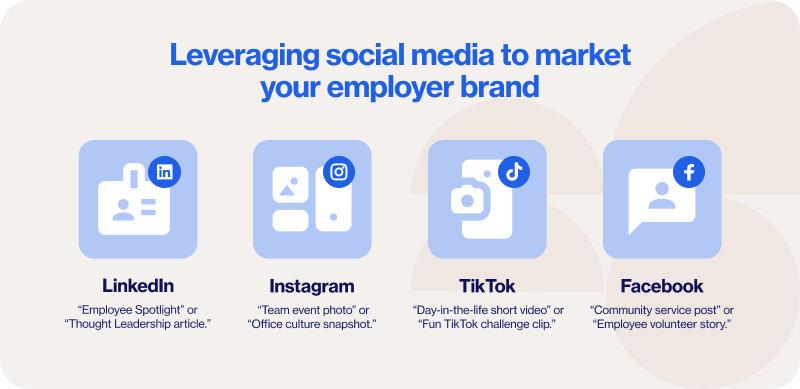
Every social network has a slightly different audience and content format, so tailor your employer branding approach for each. Below is a breakdown of how to utilize five major platforms for employer branding success:
- LinkedIn: The go-to professional network for sharing detailed job openings, company news, and industry thought leadership. Use LinkedIn to highlight career development opportunities and showcase your organization’s expertise. For example, post articles or videos of your experts discussing trends, and share employee testimonials about their growth at the company. LinkedIn features such as employee-written articles and recommendations can significantly boost credibility. Current employees can leave testimonials on the company page about their experiences, enhancing your brand’s appeal.
- Instagram: As a visual platform, Instagram is perfect for bringing your company culture to life through images and short videos. Show off the human side of your workplace – think office snapshots, team celebrations, behind-the-scenes glimpses, and employee takeovers. Instagram is especially effective for highlighting your work environment, team spirit, and community involvement. You can use Instagram Stories for casual day-in-the-life content (e.g., an employee walks viewers through their workday). Encourage employees to post their own work-life moments and use a branded hashtag so you can re-share their content on the corporate Instagram. This cross-sharing not only amplifies reach but also makes employees feel appreciated.
- TikTok: Ideal for creative, fun content that appeals to younger audiences or anyone who enjoys a bit of entertainment. Short-form videos showcasing your company in a humorous, candid, or innovative light can significantly boost your employer brand among Gen Z and millennials. For example, some companies do quick “office tour” videos, mini skits about life at the company, or participate in viral TikTok challenges (appropriately tailored to fit their culture). Consider letting employees run with TikTok ideas – their authenticity is key. Have volunteers do “day in the life” takeovers on the company’s TikTok or create fun team-challenge videos. The content should be engaging and aligned with popular TikTok trends, demonstrating that your company is a modern, enjoyable place to work.
- Facebook: It remains a useful platform, especially for building community and sharing longer-form updates. It’s great for reaching a broad audience, including potential candidates who might not be on other platforms. Use Facebook to post about company events, highlight employee stories, and demonstrate corporate social responsibility initiatives (e.g., charity drives, community service). Employees can engage by sharing these posts or posting in their own words about company-sponsored activities they participate in (tagging the company). Facebook allows more room to go in-depth – for instance, you might share a recap of a volunteer day with an album of photos and quotes from employees. It’s also a good place to post job opportunities with more detail and a personal touch, since Facebook’s format supports longer descriptions and discussion.
By customizing your content to each platform’s strengths, you meet candidates where they already spend time. A multi-channel social media strategy ensures that your employer brand is visible and compelling, whether someone is browsing LinkedIn for industry news or scrolling Instagram on the weekend. Remember to maintain consistency in core messaging across platforms (so your brand feels unified), while adapting style and format to fit the medium.
How HR and Marketing can build a unified employer brand
To sustain a strong employer brand, HR and Marketing must work hand in hand on an ongoing basis. Collaboration ensures that recruiting campaigns, company culture initiatives, and external branding are all aligned. Here are some best practices to foster effective partnership between the HR and Marketing teams:
- Joint strategy and planning: Develop a shared employer branding strategy that both departments contribute to. For example, create a joint content calendar that outlines what will be posted on corporate social channels and which employee advocacy content to promote each week. Clearly define roles: Marketing might own creative content production, while HR provides the stories and information from inside the organization. By planning together, you ensure a good mix of company-driven and employee-generated content and avoid siloed efforts. Regular strategy meetings between HR and Marketing leadership can keep goals aligned (e.g., hiring needs, campaign timing).
- Collaborative content creation: Blend HR’s and Marketing’s strengths when creating employer brand content. For instance, Marketing can assist HR in crafting job posts or recruitment ads that are not only informative but also on-brand and appealing, highlighting culture and values. Conversely, HR can provide Marketing with authentic content, such as employee testimonials, interview quotes, or success stories from within the company. This two-way exchange ensures the content sent to candidates is both polished and grounded in real employee experiences. Consider having HR and Marketing co-create blogs or videos about working at the company – HR ensures accuracy and relevance to what candidates ask about, while Marketing ensures it’s engaging and visually consistent with your brand.
- Cross-functional teams or councils: Form a cross-functional “employer brand team” with representatives from HR, Marketing, and other groups such as Communications or Employee Experience. This team can oversee major initiatives – from launching an employee advocacy platform to planning recruiting events or monitoring Glassdoor reviews. Having a dedicated task force ensures that employer branding isn’t an afterthought; it gets regular attention and a coordinated approach. It also facilitates quick feedback loops (Marketing learns which recruitment messages resonate, HR hears what branding efforts drive candidate interest, etc.). Align this team’s objectives with both HR metrics (such as quality of hire and retention) and Marketing metrics (such as reach and engagement) to keep everyone accountable for shared outcomes.
Above all, keep the communication channels open between HR and Marketing. Share successes (e.g., a particularly high-performing LinkedIn post or a successful referral-hire campaign) so both sides can see the impact of collaboration. When HR and Marketing collaborate effectively, the employer brand message that reaches the market will be powerful and cohesive, and the internal culture will reinforce externally promoted messages.
Metrics that matter: Measuring employer brand success
As with any strategic initiative, it’s important to measure the impact of your employer branding efforts. Tracking key metrics will tell you what’s working, what’s not, and how you can continuously improve. Here are some key metrics to monitor for employer branding, along with how to use them to optimize your strategy:
- Engagement on social posts: Track likes, comments, shares, and click-through rates on both corporate and employee-shared posts about your employer brand. High engagement means your content is resonating. Pay special attention to employee-generated content – ideally, those posts should show even higher engagement than corporate posts because of their authenticity. If you notice, for example, that employee testimonial videos get far more shares than formal HR posts, take that as a cue to double down on similar content. Also, compare platform performance: if your Instagram content is getting way more interaction than your Facebook content, you might reallocate resources accordingly.
- Referral and recruiting metrics: Measure the number of candidates who come through your referral program and employee advocacy efforts, and the stage of the hiring process they reach. Important metrics include: the percentage of total hires from referrals, the time-to-hire for referred candidates vs. others, and the retention rate of referred hires after, say, 1 year. A rise in referral hires or a shorter job-filling time after launching advocacy would indicate that your employer brand efforts are paying off in tangible hiring outcomes. If certain departments get more referrals, see what they’re doing right and replicate it elsewhere.
- Employer brand perception: This is more qualitative but equally crucial. Use employee surveys, candidate surveys, and even public reviews (Glassdoor, LinkedIn comments) to gauge how people perceive your company as a place to work. You might track your Glassdoor rating over time or include employer-brand questions in exit and new-hire interviews (“What influenced you to join our company?”). Sentiment analysis tools can also scan social media or reviews for themes (e.g., many mentions of work-life balance as a positive). If you find that external awareness of your key culture messages is low, you may need to amplify those themes in your content. Or if candidates frequently mention they loved seeing employees post about the culture, that’s a sign your advocacy is boosting your reputation.
When you have data on these metrics, close the loop by refining your strategy. For example, if you discover that posts about community volunteering get the most engagement, schedule more of them on your calendar. If referral hires stay 20% longer than others, consider investing more in referral incentives and featuring referral success stories in internal communications. Likewise, if surveys show candidates aren’t aware of a certain program or value that you pride yourself on, work with Marketing to highlight it more prominently in employer brand content. The metrics not only demonstrate ROI but also guide you in optimizing your efforts, focusing your efforts where you see the most impact.
Finally, be patient and consistent. Employer branding is an ongoing effort, and some benefits (like improved retention or greater diversity in hiring) play out over the long term. Regularly reporting these metrics to leadership will help maintain buy-in. Over time, you should see a positive trend: more engagement, more advocacy participation, higher referral rates, and better hiring outcomes that correlate with the employer branding initiatives you’ve implemented.
Bringing it all together: Advocacy, referrals, and social reach
Employer branding is most powerful when all the pieces work together: a clear brand identity, engaged employees, cross-team collaboration, and savvy use of social platforms. By bridging the efforts of Marketing and HR, you ensure that the story you tell externally matches the reality internally, creating a genuine brand people trust. The strategies discussed – from employee advocacy to referral incentives – reinforce each other. For example, a happy employee who shares their work experience online not only boosts your brand image but might also refer a friend to join; that referred hire, in turn, adds to your positive culture and will likely become a brand advocate themselves. It’s a virtuous cycle.
Real-world examples show how this synergy pays off. For instance, Splunk’s employer branding on LinkedIn is rich with employee success stories, tech industry insights, and diversity and inclusion highlights – content generated by both the company and its employees – which helps attract tech talent in a competitive market. In the financial sector, Charles Schwab leverages its employees on social media by sharing their career growth stories and even promoting the internal referral program through posts; this authentic approach showcases the culture and encourages high-quality referrals. These companies demonstrate that when employees are true partners in employer branding, the result is a compelling online presence that draws in candidates who feel a personal connection before they even apply.
In conclusion, building an irresistible employer brand is a strategic journey that requires collaboration, creativity, and consistency. By engaging your employees as brand ambassadors, rewarding them for referrals, and broadcasting your culture through social media, you create a magnetic employer brand that not only attracts top talent but also instills pride in your current team. In today’s talent market, that’s a formula for long-term success: a high-performing workforce that is truly invested in the company’s mission and reputation.
Final thoughts
In a hyper-competitive talent market, employer branding has become a make-or-break factor in recruiting. It’s no longer just about offering a good salary; it’s about showcasing a work culture and mission that people want to be a part of. Strong employer brands yield big advantages – companies with a positive employer reputation can halve their cost-per-hire and significantly boost retention. On the other hand, if your company is seen as a bad place to work, it repels candidates (even if they’re unemployed, most won’t apply to a company with negative reviews). The message is clear: investing in your employer brand pays off in attracting and keeping great people.
What exactly is an employer brand?
It’s the perception of your company as an employer, encompassing your culture, values, work environment, and employee experience. Essentially, it’s the answer to “Why work here?” A strong employer brand tells a compelling story about what makes your workplace special – whether it’s your dynamic team culture, your innovative projects, your growth opportunities, or your social impact. Companies like Patagonia and Salesforce are known as much for their cultures and employee values as for their products. That reputation doesn’t happen by accident; it’s carefully cultivated and communicated.
HR and Marketing: a tag-team for talent.
Building and marketing an employer brand is a joint effort between HR (who know what employees and candidates care about) and Marketing/Communications (who know how to craft and spread a message). By working together, these teams can create an authentic narrative that aligns the internal reality with the external image. This includes everything from aligning on core values and the EVP (Employee Value Proposition) to ensuring the careers webpage, job descriptions, and social media posts consistently reflect that story. When HR and Marketing collaborate, the result is a unified brand voice that resonates with the right candidates.
Leverage your greatest asset – your employees.
One of the most powerful ways to promote your employer brand is through your current employees’ voices. Encouraging employees to share their positive experiences on platforms like LinkedIn or Instagram can massively amplify your reach. People trust employees’ perspectives; for instance, content shared by employees often generates far higher engagement than the same content from official company accounts. This is the concept of employee advocacy – turning employees into brand ambassadors. Simple actions, such as employees posting about a cool project, an event, or why they enjoy their job, humanize your brand and build credibility with job seekers. To support this, companies are providing shareable content, creating hashtags (e.g. #LifeAtYourCompany), and even offering incentives or recognition for active advocates. The tone is genuine, not scripted, which is exactly why it’s effective.
Employee referral programs
Complement referral programs by tapping employees’ networks to find new hires. Your team likely knows other talented people in the industry – so encourage them to refer those contacts for open roles. Many organizations offer referral bonuses or other rewards as motivation. Referred candidates tend to be hired faster and stay longer because they are recommended by someone who knows the company. Plus, when employees refer friends, it’s a sign they genuinely believe in the company (another boost to your brand authenticity). In practice, a strong employer brand encourages employees to refer others (“I love it here, you should join us”), and those referrals, in turn, usually reinforce the positive culture.
Meet candidates on social media. Modern candidates are actively researching companies on social platforms, so use those channels wisely. On LinkedIn, share thought leadership and team achievements to show you’re an industry leader and a great employer for professionals. On more casual platforms like Instagram, give a peek into team outings, office life, or employee stories – let the personality of your workplace shine through visually. TikTok can be a fun outlet to showcase creativity or humor in your culture (think quick tours, employee skits, or day-in-the-life videos). And don’t forget Facebook, which is still a major platform for community building and longer-form storytelling, such as highlighting volunteer work or posting job openings with a personal touch. Each network has its vibe, so tailor your content accordingly, but keep the core message consistent: what makes your company a fantastic place to work.
Measure and adapt. Just like you’d track marketing campaigns, track your employer branding efforts. Are you seeing more applicants since launching that culture blog or employee testimonial video? Is your LinkedIn following growing and engaging? How many referral hires did you make this quarter, and how many are staying? Use metrics such as engagement, referral rates, offer acceptance rates, and candidate survey feedback to gauge success. If something’s not moving the needle – say, your Instagram posts are falling flat – adjust the strategy (maybe switch up the content or platform). Employer branding is an ongoing process of listening and improving. Over time, success looks like a larger pool of qualified applicants, faster hires, higher retention, and employees who are proud to evangelize your company.
To close, an irresistible employer brand is built on authenticity and consistent storytelling. It’s brought to life by your own people and amplified through the channels where your audience spends time. When done well, it creates a magnetic pull, drawing in talent that not only has the right skills but also connects with your mission and culture. The effort is well worth it: you’ll spend less time struggling to fill positions and more time onboarding enthusiastic new team members who already can’t wait to be a part of what you’ve built.
Frequently asked questions
Download and share with your team
How to build an irresistible employer brand with social advocacy
![The simple guide to creating a chatbot [on Facebook, Website, Messenger Apps]](https://cdn.www.oktopost.com/blog/wp-content/uploads/2019/11/The-Simple-Guide-to-Creating-a-Chatbot-Oktopost-1.jpg)