Why social media matters now for manufacturing marketing





Table of contents
- Social media is part of digital marketing, not separate from it
- How manufacturing buyers use social media to validate decisions
- Why social media is no longer optional for manufacturing marketers
- How social media supports long and complex manufacturing sales cycles
- Why do people matter more than company pages in manufacturing social media
- What effective social media marketing looks like in manufacturing today
- How Oktopost helps manufacturing teams turn social into a growth channel
Manufacturing marketing has always been pragmatic. Channels were chosen because they worked, not because they were fashionable. Trade shows, industry publications, distributor relationships, and sales-led outreach earned their place by delivering results.
So when social media entered the conversation, it was often treated with skepticism.
For years, social media was viewed as something consumer brands did or B2B companies experimented with on the side. But that perception no longer matches reality. Today, social media plays a very specific and increasingly important role in the broader digital marketing strategy for manufacturing organizations.
Not as a replacement for digital marketing.
But as the layer where visibility becomes credibility.
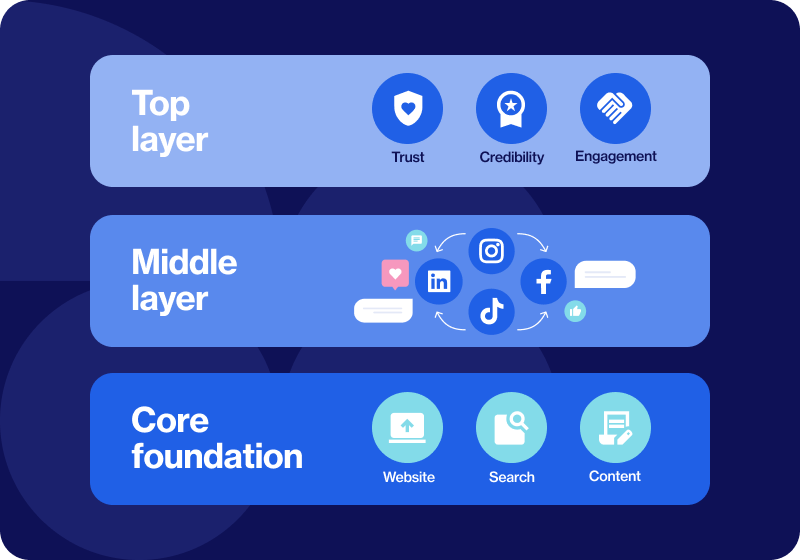
Social media is part of digital marketing, not separate from it
Before going further, it is worth being clear about definitions.
Digital marketing includes:
- Websites and landing pages
- Search and SEO
- Content marketing
- Marketing automation and analytics
Social media does not replace these foundations. It amplifies them.
Social is where:
- Content gets discovered and distributed
- Expertise gets validated by people, not just pages
- Brands are evaluated through consistency and presence
In a digital-first buyer journey, social media connects research to trust.
This distinction matters, especially in manufacturing, where buyers are cautious, and decisions carry operational risk.
How manufacturing buyers use social media to validate decisions
Research consistently shows that today’s B2B buyers do most of their research independently before engaging sales. Gartner describes the modern B2B buying journey as non-linear and largely self-directed, with buyers gathering information across multiple digital channels on their own terms.
What happens after that research is equally important.
Buyers do not stop at websites and whitepapers. They look for validation. They want to see:
- Who stands behind the brand
- Whether expertise is visible and consistent
- How active and credible the organization feels
LinkedIn’s B2B research shows that professional networks play a key role in trust-building, particularly when buying decisions involve multiple stakeholders.
In manufacturing, this often means:
- Reviewing leadership and employee presence on LinkedIn
- Observing how companies communicate publicly
- Noticing whether insights are shared consistently or sporadically
Social media becomes the place where buyers confirm whether the brand they discovered through search and content is one they trust enough to engage.
Recommended for further reading
Why social media is no longer optional for manufacturing marketers
Manufacturing organizations that still treat social media as a “nice to have” face a growing gap between how buyers behave and how marketing shows up.
Buyers expect visibility. Absence raises questions.
Social media matters most during the research phase, when buyers are forming opinions without vendor involvement. Buyers use social platforms to validate what they discover through search and content. If a brand is absent at this stage, social media cannot correct that later. Visibility must exist before decisions are shaped, not after.
Research from Google shows that more than half of B2B purchase decisions are influenced by digital content, with search and online discovery playing a central role. Social media sits directly downstream from that discovery, shaping perception after awareness is created.
At the same time, manufacturing companies that invest in digital marketing, including social, consistently report stronger outcomes. Oktopost’s research on manufacturing firms’ social media highlights that manufacturers investing in digital channels see greater success and improved inbound performance.
Social media contributes to that success by:
- Extending the lifespan of content beyond the website
- Reaching buyers earlier through professional networks
- Supporting credibility during long sales cycles
This is not about volume or virality. It is about consistency and relevance.
How social media supports long and complex manufacturing sales cycles
One of the biggest misconceptions about social media in manufacturing is that it only works for short sales cycles or brand awareness.
In reality, social media is particularly effective for complex, long-cycle sales because it:
- Maintains visibility over time
- Reinforces expertise without constant sales outreach
- Keeps brands present while buyers move slowly
Manufacturing deals rarely close quickly. Committees change. Priorities shift. Budgets pause and restart. Social media helps marketing stay present during these gaps without forcing premature sales conversations.
When buyers see consistent insights from a company over months, familiarity builds. Familiarity reduces perceived risk. Reduced risk improves conversion when sales finally engage.
Why do people matter more than company pages in manufacturing social media
Social media in manufacturing works best when it goes beyond the corporate page.
Buyers trust people more than logos. Employee voices humanize brands and make expertise tangible.
McKinsey’s research shows that younger professionals increasingly influence B2B buying decisions and expect authentic, digital-first engagement. That expectation applies not just to content, but to how visible and accessible expertise feels.
When engineers, sales leaders, and subject-matter experts share insights publicly:
- Content feels more credible
- Brands feel more approachable
- Trust builds faster
This does not require everyone to become an influencer. It requires structure, guidance, and alignment so that employees can participate safely and confidently.
Where manufacturing social strategies often fall short
Many manufacturing companies struggle with social media, not because it doesn’t work, but because it is approached tactically rather than strategically.
Common pitfalls include:
- Posting sporadically
- Treating social as a broadcast channel
- Measuring only vanity metrics
- Keeping social disconnected from broader digital goals
When social is not tied to content strategy, buyer journeys, and sales objectives, it becomes difficult to justify investment.
When social is treated as part of the digital ecosystem, its value becomes much clearer.
What effective social media marketing looks like in manufacturing today
Strong social strategies in manufacturing share a few characteristics:
- LinkedIn-first focus aligned with buyer behavior
- Content designed to educate, not promote
- Employee participation is supported by structure
- Measurement tied to awareness, engagement, and pipeline influence
Social media works best when it reinforces what buyers already discovered through search and content, rather than trying to replace those channels.
It is not about being louder. It is about being present and credible.
How Oktopost helps manufacturing teams turn social into a growth channel
Oktopost helps manufacturing marketers turn social media into a strategic extension of their digital marketing efforts.
With Oktopost, teams can:
- Plan and manage a consistent LinkedIn-first presence
- Distribute content through both brand and employee channels
- Empower employees to share expertise without risk
- Measure how social activity supports awareness and revenue goals
Social media already influences how manufacturing buyers evaluate vendors. Oktopost helps ensure that influence works in your favor.
If you want to see how social fits into a modern manufacturing marketing strategy, request a consultation with a marketing expert and see how leading manufacturing organizations influence buying committees before sales get involved.
Frequently asked questions