


- Sentiment tools score mentions as positive, negative, or neutral using machine learning, though sarcasm still trips them up.
- 26% of US consumers cite poor customer service as a reason for leaving a brand, making sentiment tracking a retention tool.
- The four-step process: locate your audience, run listening tools, define sentiment terms, then calculate a baseline.
- Sentiment data also works for competitive analysis, revealing how audiences feel about rival brands.
Social media can deliver an incredible boost for your business. We all know this. However, social media is also a force to be reckoned with, and, unless you have a team of people monitoring each one of your social channels constantly, it’s impossible to keep on top of what your followers are saying about your brand.
Here’s when social media sentiment analysis comes into play. In this piece, we’ll cover what a sentiment analysis is, how to track it, and what the benefits are for B2B brands.
Jump to a section:
- What is a Social Media Sentiment Analysis?
- How Does a Sentiment Analysis Work?
- Why is a Sentiment Analysis important?
- 5 Really Good Reasons to Conduct a Social Media Sentiment Analysis
- How to Conduct a Social Sentiment Analysis
- Benefits of a Social Sentiment Analysis
What is a social media sentiment analysis?
Social media sentiment analysis is the art of analyzing data on what your audience truly thinks about your business. It’s an incredibly powerful tool in your analytics toolkit. A social media sentiment analysis examines all your digital brand mentions, reviews, and comments, and tries to understand the emotion behind them. If your business is prevalent on numerous social media platforms, you can see why monitoring sentiment is a huge task.
Sentiment analysis generates a broader understanding of how your audience is interacting with your social content.
Analyzing your social media presence is more than just counting likes, mentions, and engagements. It’s a deep delve into the emotions behind all your comments and interactions. This all adds up to a picture of positive, negative, and neutral opinions. Opinions that you can use to create better, more engaging content for your followers.
How does social media sentiment analysis work?
Acting as social listening tools, technology that’s driven by artificial intelligence in sales environments analyzes mentions for their true meanings.
These market-leading technologies analyze all digital interactions for tone, intent, and feelings. Determining the strength of your audience’s emotions facilitates an understanding of your digital presence’s health.
Powered by natural language processing (NLP) and machine learning, gathering authentic customer sentiment has never been so important. Technologies scan text to pick out negative, positive, and neutral implications before assigning scores (more about this in detail later).
Let’s analyze a mixed-message sentence as an example:
“Their latest social posts suck, which is a shame because I love their products and fast delivery”.
This kind of sentence takes intricate machine learning capabilities to understand the pretext. In essence, it would probably be classed as a neutral sentence.
Why is social media sentiment analysis important?
A social media sentiment analysis can be invaluable for understanding how your audience perceives your brand, and even how this compares to how they perceive your competitor brands. Without understanding where their pain points are, or what they love about your brand, you’ll never be able to solve the problems or build on your successes.
With 26% of US consumers stating poor customer service as one of the main reasons for brand disassociation, you must keep your customer satisfaction levels high. And this means across every single avenue of communication you have—including, of course, social media channels.
A couple of bad reviews can snowball into a catastrophic event for a brand, especially on fast-moving social channels. So it’s essential to perform a social media sentiment analysis frequently to stop any bad publicity from being unleashed.
“It takes 20 years to build a reputation and five minutes to ruin it. If you think about that, you’ll do things differently.” —Warren Buffett
A social media sentiment analysis would have prevented this situation from escalating, as customers don’t tolerate being left unanswered for lengthy amounts of time. After all,
we’re all familiar with social media driving people into a frenzy of emotions (otherwise known as jumping on the bandwagon).
Unless you’ve been living in a digital dead zone, you’ll know that customer loyalty and business success are increasingly due to customer happiness and satisfaction. To increase these customer-centric metrics, you’ll need to harness your audience’s sentiments and act accordingly.
Pro tip: combine regular social media audits with sentiment analysis processes to create a bulletproof social strategy.
This article will help you to discover how to drive brand engagement, enhance your digital presence, and, ultimately, your customers’ experience with your business.
Moreover, use sentiment analysis to answer invaluable questions such as these:
- Is this customer intending to buy your newly-launched product?
- What does your audience think about your new service?
- Is the content you push out relevant to your target audience?
- What kind of content would your potential customers find more relevant?
Five really good reasons to conduct social media sentiment analysis
1. Make better business decisions
Social media sentiments give you insights into your target audience’s thoughts and feelings—use them to your advantage. Understanding what your audience’s current concerns are means that you can create tailored products for them.
For example, if you’re a UCaaS provider and your customers are upset because you are unable to provide an HD call feature, you can use this data to go to your technical team and ask them to make the necessary improvements to your product.
2. Deliver more valuable social media content
Seeing the social media content that your audience engages the most with is like a crystal ball into their innermost thoughts. You’ll soon gain an understanding of what and what not to post on your social media channels.
3. Protect your business’s reputation
Let’s say you’re responsible for monitoring the quality control of a remote call center team. Using remote call center management tools to perform a sentiment analysis enables you to quickly see if your customers are receiving the service they expect.
4. Increase your conversion rate optimization
Aligning your business’s interactions with your audience encourages brand loyalty. The stronger their loyalty is, the more likely it is that they’ll buy from you.
5. Investigate the competition
Sentiment analysis comes into its own when checking out the competition. By analyzing your audience’s sentiments, you’ll be analyzing your competition’s audience’s sentiments, too. This gives you an edge when creating social media marketing campaigns.
How to conduct a social media sentiment analysis
Step 1: Locate audience
First up, find where your customers are. The obvious direct mentions on Facebook, Twitter, and Instagram are a great place to start. But don’t forget review sites, your website, and third-party sources.
We’re loving and living for this flavor mashup. ??#SoGoodTogether pic.twitter.com/4oxxRQC7GR
— Coca-Cola (@CocaCola) March 9, 2020
Step 2: Engage sentiment analysis tools
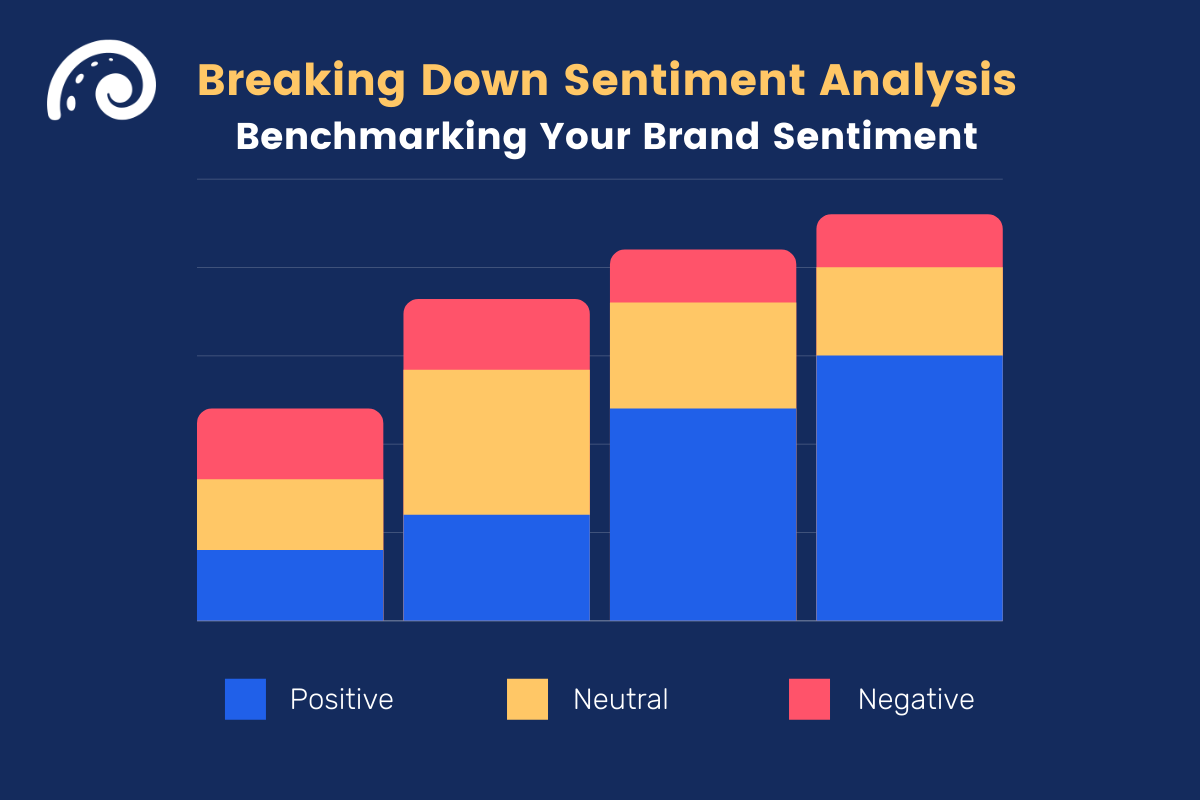
Utilizing social listening and sentiment analysis tools saves a lot of manual labor, especially if you’re experiencing growth and scaling in business with increased online visibility. Sentiment analysis tools use filters to measure social mentions and interactions, and are typically color-coded for easy visualization.
Check out sentiment analysis tools that pinpoint related mentions that don’t actually tag your brand, and filter mentions by hashtags and keywords to precisely understand user sentiment.
Step 3: Sentiment terms
To analyze your sentiments, you’ll need to define the good, the bad, and the ugly. Realistically, you’re looking for words like love, thanks, perfect, incredible for the positives, and worst, hate, avoid for the negatives. Divide your sentiment terms into their own emotion camps to shortlist them.
As well as words, scan emojis for a clear understanding of your audience’s feelings about your brand.
Pro tip: Watch out for sarcasm. It’s best not to completely rely on machine capabilities for sentiment analysis purposes. This is because it’s hard for machines to pick up on ironic or sarcastic online mentions.
Step 4: Crunch the numbers
Conduct a social media sentiment analysis regularly to find out your business’s baseline. To do this, assign values to positive (1), neutral (0), and negative (-1) interactions for your selected time period, and calculate your “normal.”
Quick-Fire benefits of a social media sentiment analysis
Fast Feedback
A custom or downloadable social media report template can be used to measure and analyze audience sentiment. This can quickly tell you whether your recent social media activity is positive or negative.
Better customer experiences
The analysis of social media interactions means you can respond to your customers in a better way, and deliver enhanced service. Your customers will appreciate the fact that you are listening to them, which will help you achieve your objectives.
Social media campaign responses
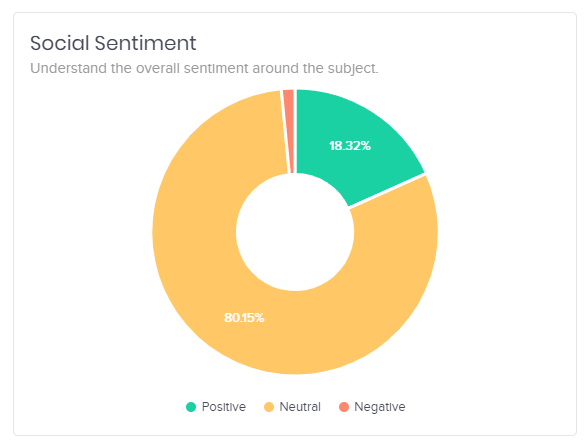
You can easily monitor the success of social media campaigns with sentiment analysis tools. A simple chart generated from your data shows clearly what your audience’s opinions are, as shown below.
Investigate influencers
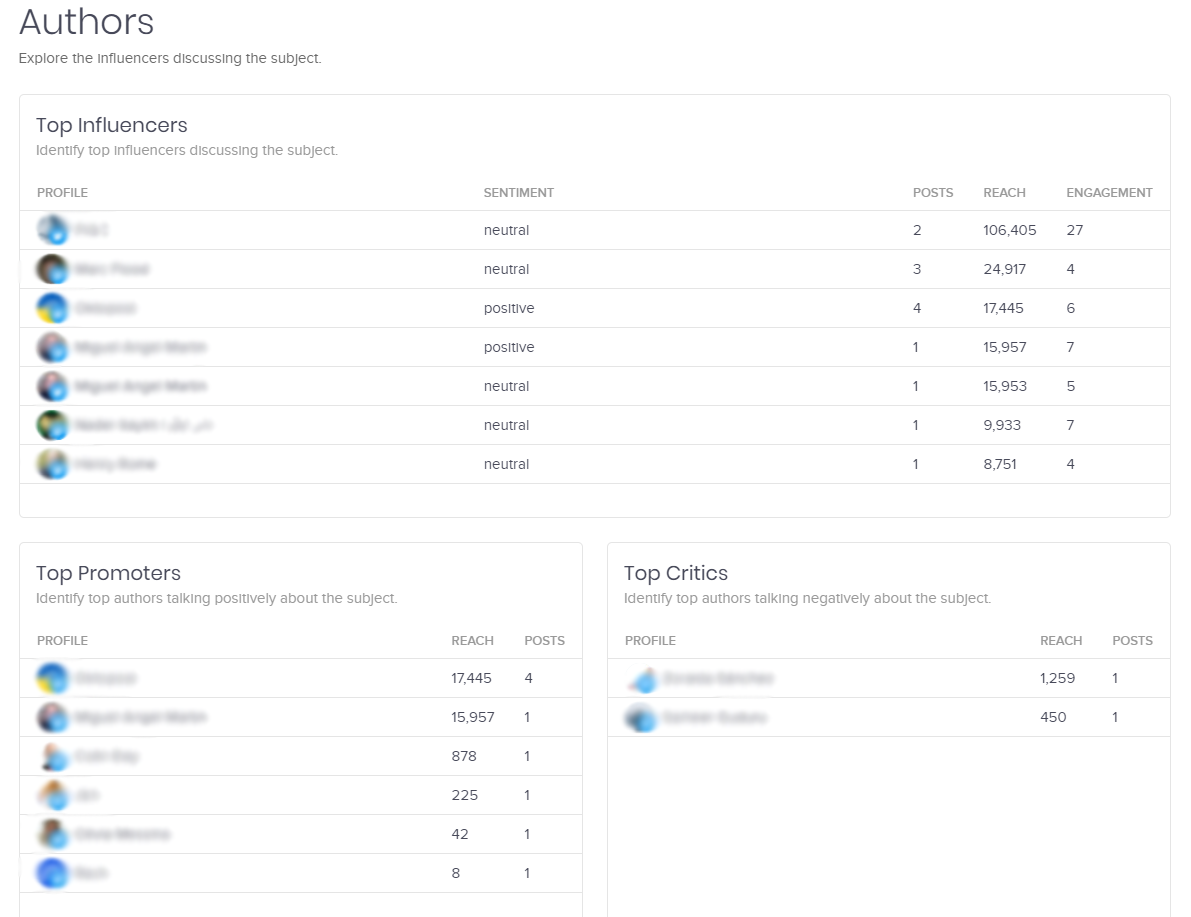
Compare performance analysis of your influencers if this is an element of your marketing plan. You can simply find out the most effective influencer posts, and which channels are engaged with most frequently.
Improve products and services
Even if you receive negative feedback online, see it as an opportunity to improve your offers. Your customers provide valuable information about what they’d like to see from you in the future. Utilize a social media response template to manage negative comments, crises, and other large-scale social events.
Is it time for your business to analyze social media sentiments?
Social media marketing is such a huge part of business marketing. So, if you’re not analyzing what’s being said about your business online, you’re missing a trick. If you’re considering implementing a CRM system, feeding in sentiment analysis data will form a comprehensive picture of your audience.
Analyzing your audience’s sentiments is even more important during times of business change. If you’re launching a new product, you’ll want to know immediately what the digital reaction is from your audience. This is where a social media sentiment analysis will help enormously.
Utilize all the social listening tools at your disposal to gain valuable audience insights. It’s time to drive your business success and customer satisfaction levels onwards and upwards.


![How to use a social media response template [Free Download] visual guide](https://www.oktopost.com/wp-content/uploads/2026/03/cdc-n3mn7igtws4-unsplash-optimized-535x357.webp)